

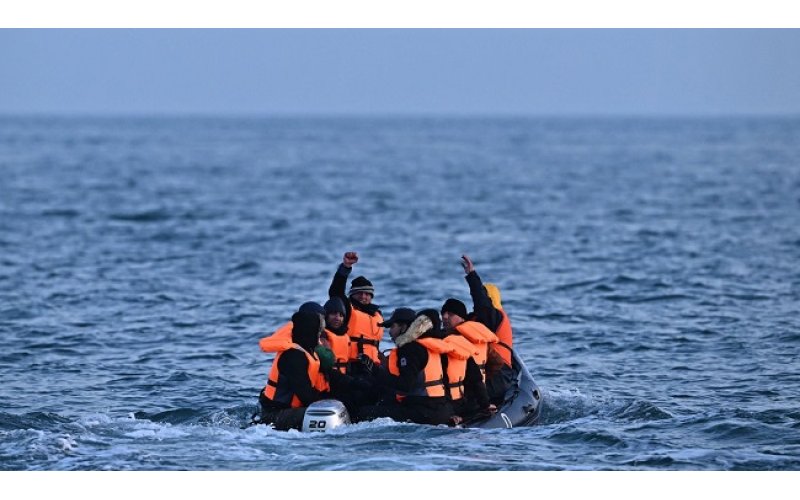
A tragic shipwreck off the coast of Tobruk, eastern
Libya, has claimed the lives of at least 50 Sudanese refugees, the
International Organization for Migration (IOM) confirmed on Monday.
According to an IOM spokesperson, the incident
occurred Sunday when a rubber boat carrying 75 people caught fire while en
route to Greece. “At least 50 lives were lost,” the spokesperson said, adding
that 24 survivors received emergency medical care. It was not immediately clear
whether one person remained unaccounted for.
Migration Through Libya
Libya remains a key departure point for thousands of
migrants seeking to cross the Mediterranean to Europe. The war in neighbouring
Sudan, where clashes between the army and paramilitary forces have displaced
millions, has pushed more than 140,000 Sudanese refugees into Libya in the past
two years, nearly doubling their numbers in the country.
Deadly Route
The central Mediterranean is considered one of the
world’s deadliest migration routes. Between January 1 and September 13 this
year, at least 456 people died and 420 were reported missing on this route,
according to IOM data. In 2024 alone, 2,573 migrants died attempting to reach
Europe.
Libyan authorities have intercepted and returned
17,402 migrants so far in 2025, including 1,516 women and 586 children.
Survivors often report abuse, extortion, and near-slavery conditions while
stranded in Libya.
A Country in Crisis
Since the NATO-backed uprising that toppled Muammar
Kadhafi in 2011, Libya has remained mired in conflict and political division,
split between a UN-recognised government in the west and an eastern
administration supported by military commander Khalifa Haftar. The chaos has
enabled traffickers and smugglers to thrive, exploiting vulnerable migrants.
The IOM has renewed its calls for urgent international
action to strengthen safe migration pathways and protect refugees from the
“harrowing risks” of the Mediterranean crossing.
Comments:
Leave a Reply