

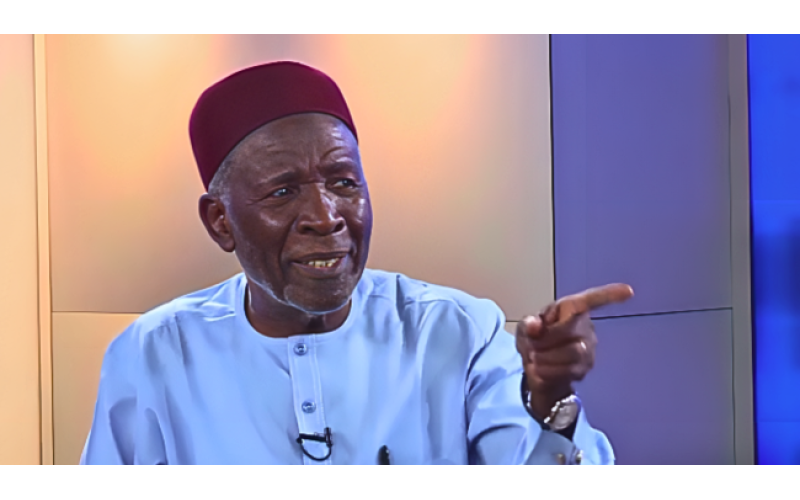
A chieftain of the New Nigeria Peoples Party (NNPP),
Buba Galadima, has criticised the policies of the ruling All Progressives
Congress (APC), dismissing claims that living conditions have improved and
warning that authorities should not underestimate public dissatisfaction.
Speaking on Thursday during an appearance on Politics
Today on Channels Television, Galadima accused the government of clamping
down on dissent and ignoring the growing frustration among Nigerians.
He cited instances in Kano where young men were
allegedly arrested and jailed for expressing their opinions on radio
programmes, claiming that some were tried at night and sentenced under
pressure. According to him, such actions could fuel wider unrest if not
addressed.
“Things start small. You don’t know how they can
blossom and become something else. They shouldn’t presume that Nigerians are
gullible and cannot react,” he said.
References to 2015 Election
Galadima argued that the 2015 general election
demonstrated Nigerians’ willingness to vote out an incumbent government over
insecurity. He recalled how the administration of former President Goodluck
Jonathan was defeated amid concerns over insecurity in the North-East,
particularly the activities of Boko Haram and the abduction of the Chibok
schoolgirls.
He suggested that the current administration should
draw lessons from that political shift, warning that public frustration could
again influence electoral outcomes.
Criticism of Economic Policies
Turning to economic issues, Galadima accused the
APC-led government of undermining agriculture through import policies and
rising production costs, especially the high price of fertiliser, which he said
now sells for between ?60,000 and ?70,000 per bag.
He argued that farmers — who he claimed make up a
large portion of the population — have been adversely affected, adding that
farming activities, including dry-season farming in parts of the North, have
reportedly declined.
Galadima warned that continued grain importation and
rising costs could negatively impact local rice mills established during the
administration of former President Muhammadu Buhari.
Broader Political Context
The APC came to power in 2015 after campaigning
against insecurity and economic challenges under Jonathan’s administration.
Party leaders, including current President Bola Tinubu, had argued at the time
that stronger leadership was needed to address national security concerns.
Since assuming office in 2023, Tinubu’s administration
has implemented major economic reforms, including the removal of fuel subsidy
and the unification of exchange rates. While the government maintains that
these measures are necessary to stabilise the economy, critics say they have
contributed to record inflation and rising living costs.
With the 2027 general elections approaching, political
debates are intensifying, as opposition figures continue to challenge the APC’s
economic and security record, while the Federal Government insists that ongoing
reforms will yield long-term benefits.
Comments:
Leave a Reply