

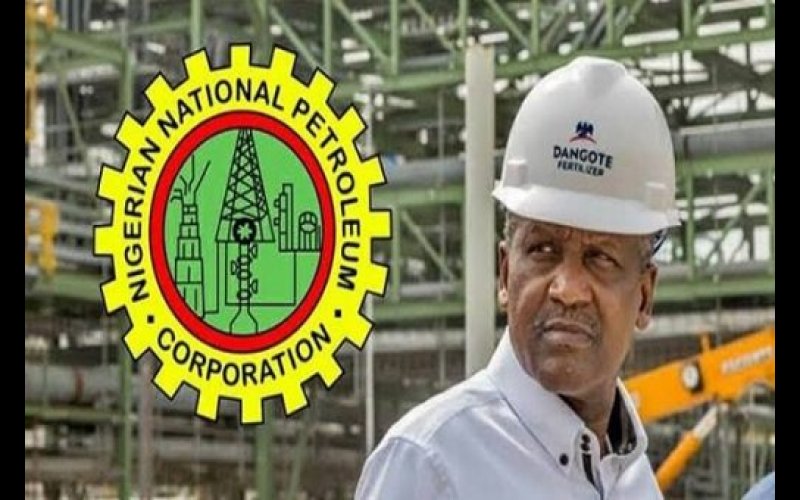
Increased competition between Dangote’s refinery and
NNPC has led to a significant reduction in petrol prices in Nigeria, providing
economic relief to consumers.
Petrol prices in Nigeria have dropped to 860 naira
(0.54 euros) per litre, a decrease driven by the growing competition between
the new Dangote refinery and the Nigerian National Petroleum Corporation
Limited (NNPC), the national oil entity.
This price reduction follows several tariff
adjustments made by Dangote, whose refinery is the largest on the African
continent.
The country, Africa’s largest oil producer, had
previously imported the majority of its fuel needs. However, since September
2024, Dangote has started producing petrol locally.
The price reduction was accelerated in February 2025,
when Dangote cut its deposit tariffs twice.
The pump price, which had reached 1,030 naira per
litre, thus decreased significantly. According to a statement from the group,
the initiative aimed to provide relief to Nigerian consumers during the Ramadan
period.
In response to this competitive dynamic, NNPC also
announced a reduction in its prices, aligning them with Dangote’s tariffs.
Impact of Subsidies and Market
Deregulation
Before Dangote’s entry into the market, Nigeria’s
public refineries were largely inactive. NNPC attempted to restart a refinery
in Port Harcourt in November 2024, but fuel imports remained essential.
The removal of subsidies on petrol, decided by
President Bola Ahmed Tinubu in May 2023, led to a sharp increase in pump
prices. In October 2024, prices reached 1,030 naira in Lagos and 1,030 naira in
Abuja, compared to around 195 naira previously.
This price hike worsened the economic challenges for
Nigerians, who faced inflation exceeding 30% in 2024.
Competition and Pricing Strategies
Ademola Adigun, CEO of AHA Strategies Ltd, commented
on this trend, emphasising that Dangote’s price cuts were aimed at
strengthening its dominant market position. He warned that this pricing
strategy could prevent other distributors from competing effectively with
Dangote.
However, the group firmly denied any accusations of
attempting to establish a monopoly. Ikemesit Effiong, an analyst at SBM
Intelligence, suggested that the price reductions could also be linked to the
stabilisation of the local currency and the drop in global crude oil prices.
Clement Isong, president of the Major Energies Marketers Association of Nigeria
(MEMAN), added that this market development reflected the deregulation of the
sector, where competition now regulates prices.
Comments:
Leave a Reply