

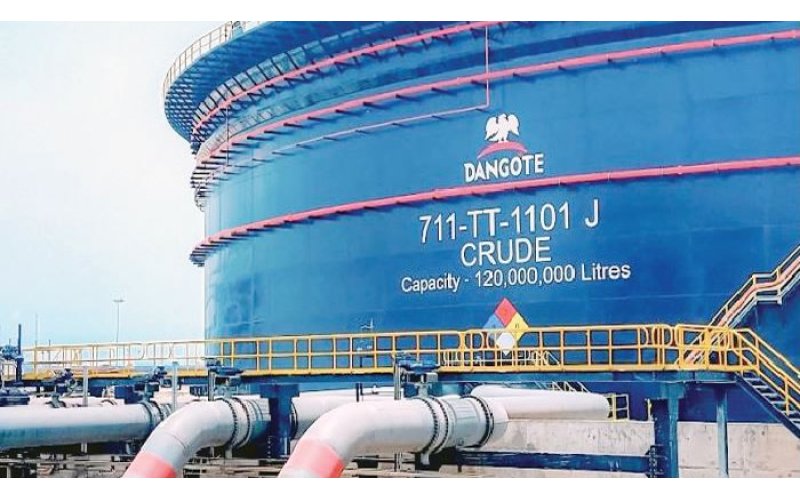
The Dangote Group has announced that its 650,000
barrels-per-day Petroleum Refinery will commence direct supply of Premium Motor
Spirit (PMS) to 11 states starting Monday, September 15, 2025.
In a statement posted via its official X account on
Thursday, the company disclosed that the gantry price has been set at N820
per litre, while retail pump prices will vary by state.
To support petrol station operators, the refinery will
also provide free delivery of PMS to registered filling stations in the
covered states, with a gradual nationwide rollout to follow. The Group
encouraged station owners to register in order to access these benefits, which
are aimed at improving distribution and ensuring supply consistency.
Background
Commissioned in 2024, the Dangote Petroleum Refinery is Africa’s largest,
designed to reduce Nigeria’s dependence on fuel imports and enhance energy
security.
In July 2025, the refinery received 4,000 CNG
trucks under a ?720 billion investment programme, targeting daily
distribution of 65 million litres of refined products, job creation for
over 15,000 Nigerians, and annual savings of about ?1.7 trillion in
energy costs.
The nationwide distribution plan, initially slated for
August 15, was delayed to September 15 due to labour and industry disputes.
Earlier this month, PETROAN announced a three-day suspension of lifting and
dispensing, while NUPENG embarked on a two-day strike. Both actions were later
resolved after the intervention of the DSS and the Federal Government, leading
to the signing of a Memorandum of Understanding (MoU) to safeguard
workers’ rights and ensure fair competition.
Why It Matters
The refinery’s direct supply is expected to ease distribution bottlenecks,
revive dormant petrol stations, and stabilise retail prices in participating
states. Industry stakeholders say the move could mark a turning point in
Nigeria’s downstream oil sector, gradually reducing reliance on imported
petrol.
Comments:
Leave a Reply