

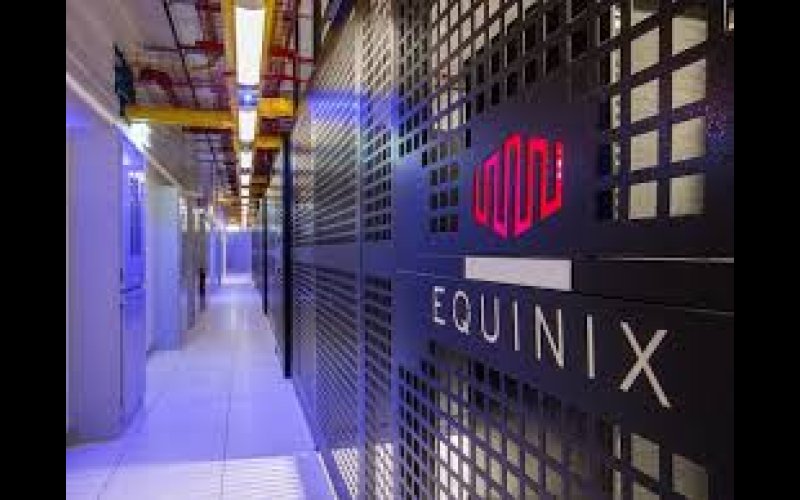
Equinix, the global data center provider that acquired
Nigeria’s MainOne, will invest $140 million to expand digital infrastructure
across southern Nigeria over the next two years. The investment includes a new data center
in Port Harcourt and an expansion of its third data center in Lagos, marking a
significant step toward decentralising the country’s internet capacity beyond
Lagos.
The move comes five months after Equinix completed the
post-acquisition integration of MainOne following its $320
million acquisition in 2022. Now, the company is deepening its
footprint in Nigeria, where 70% of subsea cable landings and data
infrastructure remain concentrated in Lagos. This pattern has reinforced a
long-standing digital divide.
As part of the expansion, Equinix will launch PR1, its
first data center in Port Harcourt, which will also serve as the first Nigerian
landing station for Meta’s 2Africa submarine cable. The move is expected to
dramatically increase bandwidth capacity in the region and reduce over-reliance
on Lagos. Equinix will also scale LG3, its third Lagos facility, to support
growing enterprise and cloud demand.
From GSM to global connectivity
Nigeria’s digital infrastructure has evolved rapidly
in the last two decades. Since the auction of GSM licenses in 2001, mobile
subscribers have grown from zero to over 140 million. Infrastructure matured
further with the rise of tower companies in 2012 and later with investments in
data centers and fiber-optic networks.
Yet, until recently, local data infrastructure was
limited, serving only basic connectivity needs. That changed in 2020 when major
global investors like Equinix began entering the market, signaling Nigeria’s
integration into the broader digital economy.
Today, Equinix operates over 260 International
Business Exchange (IBX) data centers in 74 metropolitan areas globally. These
centers are interconnected through Equinix Fabric, a software-defined platform
enabling secure, high-performance connectivity between data centers, cloud
services, and enterprise networks.
Building resilience with subsea cables
Nigeria now hosts eight submarine cable landings,
including two of the world’s most advanced systems—Google’s Equiano and Meta’s
2Africa. Both cables offer design capacities exceeding 100 Tbps, representing a
major leap forward in connectivity. However, the benefits of this expansion
remain vulnerable without robust infrastructure redundancy.
Equinix plans to address this challenge.
“We’re routing traffic over multiple cables in West
Africa on an active/active basis,” said Wole Abu, Managing Director of Equinix
West Africa, in the blog
post. “The next time a cable fails, our goal is for customers not to
notice.” This proactive strategy introduces critical resilience into the
region’s digital infrastructure.
Closing Nigeria’s digital divide
Despite significant progress in international
connectivity, a key bottleneck persists: the middle-mile infrastructure linking
coastal landing stations to inland users. While cities like Lagos, Accra, and
Abidjan benefit from relatively strong connectivity, many interior regions
remain underserved.
Nigeria’s
National Broadband Plan (2020–2025) targets 70% broadband penetration
by 2025. Yet, as of January 2025, penetration remains at just 45%. The World
Bank estimates that
Nigeria needs an additional 95,000 kilometers of fiber to achieve full
nationwide coverage—up from 35,000 kilometers.
To address this gap, the Federal Ministry of
Communications, Innovation and Digital Economy recently launched a
Broadband Alliance to develop a national fiber backbone. Private sector players
like Equinix are seen as critical to achieving that vision.
“Our vendor-neutral platform and robust
interconnection capabilities can help industry ecosystems form in West Africa
and collaborate to grow the region’s digital economy,” said Abu.
The launch of Equinix PR1 in Port Harcourt will
enhance Southern Nigeria’s internet capacity and contribute to the geographic
diversification of digital infrastructure. By breaking Lagos’ near-monopoly on
bandwidth and cable access, the project could open up new digital growth
corridors in the region.
Global data center provider Equinix has announced a
$140 million investment to strengthen internet connectivity across southern
Nigeria over the next two years. The move builds on the company’s $320 million
acquisition of MainOne in 2022, which marked Equinix’s entry into the West
African market. The goal for Equinix is to address the unequal distribution of
digital infrastructure in Nigeria, where Lagos has long dominated development.
The investments will include the launch of Equinix
PR1, its first data center in Port Harcourt, and the expansion of Equinix LG3,
its third data center in Lagos. Notably, the Port Harcourt facility will also
serve as the first Nigerian landing station for Meta’s 2Africa submarine cable,
dramatically increasing bandwidth capacity in the region and breaking Lagos’
longstanding monopoly on cable landings. This is especially significant for
southern Nigeria, which is not only home to a fast-growing population but also
forms the economic core of the country’s oil industry.
From GSM to global connectivity
Nigeria’s digital journey has evolved rapidly. Since
the auction of GSM licenses in 2001, mobile subscribers have grown from zero to
over 140 million. The rise of tower companies in 2012 enabled operators to
scale by outsourcing tower maintenance, while the arrival of fiber-optic and
data center infrastructure further expanded the digital ecosystem.
Early data centers served basic connectivity needs.
The real shift came around 2020 with the arrival of major foreign investors.
Equinix’s acquisition of MainOne represented a milestone—connecting Nigeria to
a global platform and laying the groundwork for scalable digital growth.
Today, Equinix operates more than 260 International
Business Exchange (IBX) data centers in 74 metropolitan areas globally. These
centers are interconnected through Equinix Fabric, a software-defined platform
enabling secure, high-performance connectivity between data centers, cloud
services, and enterprise networks.
Nigeria now hosts eight submarine cable landings,
including two of the world’s most advanced systems—Google’s Equiano and Meta’s
2Africa. Both cables offer design capacities exceeding 100 Tbps, representing a
major leap forward in connectivity. However, the benefits of this expansion
remain vulnerable without robust infrastructure redundancy.
Equinix has been actively working to address this
challenge.
“We’re routing traffic over multiple cables in West
Africa on an active/active basis,” said Wole Abu, Managing Director of Equinix
West Africa, in a recent blog post. “The next time a cable fails, our goal is
for customers not to notice.” This proactive strategy introduces critical
resilience into the region’s digital infrastructure.
Closing the middle-mile gap
Despite significant progress in international
connectivity, a key bottleneck persists: the middle-mile infrastructure linking
coastal landing stations to inland users. While cities like Lagos, Accra, and
Abidjan benefit from relatively strong connectivity, many interior regions
remain underserved.
Nigeria’s National Broadband Plan (2020–2025) targets
70% broadband penetration by 2025. Yet as of January 2025, penetration remains
at just 45%. The World Bank estimates that Nigeria needs an additional 95,000
kilometers of fiber to achieve full nationwide coverage—up from the existing
35,000 kilometers.
To accelerate progress, the Federal Ministry of
Communications, Innovation and Digital Economy recently launched a Broadband
Alliance focused on developing a national fiber backbone. Realizing this vision
will demand close collaboration between government and private sector
stakeholders.
“Our vendor-neutral platform and robust
interconnection capabilities can help industry ecosystems form in West Africa
and collaborate to grow the region’s digital economy,” said Abu.
The launch of Equinix PR1 in Port Harcourt will not
only enhance Southern Nigeria’s internet capacity but also contribute to the
geographic diversification of digital infrastructure. By expanding beyond
Lagos, Equinix is promoting a more inclusive and balanced digital future for
Nigeria.
Comments:
Leave a Reply