

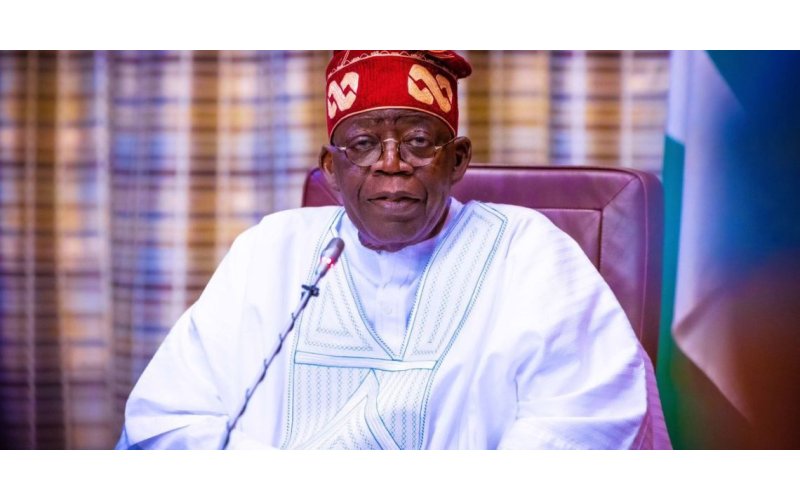
President Bola Tinubu has declared a national
emergency on food security, calling for expanded irrigation infrastructure
and inclusive water resource management across Nigeria.
Speaking at the opening ceremony of the 6th African
Regional Conference on Irrigation and Drainage in Abuja on Monday,
President Tinubu—represented by the Secretary to the Government of the
Federation, Sen. George Akume—urged African nations to adopt bold,
innovative strategies in tackling water management and irrigation challenges.
“Africa continues to face major challenges in
unlocking its irrigation potential due to inadequate infrastructure, financial
constraints, climate change, and governance issues,” Tinubu said.
“This conference offers a vital platform for us to
collectively chart a path forward.”
Tinubu emphasized that Nigeria holds over 3.1
million hectares of irrigable land, mainly around river basins like the
Niger and Benue, which he described as critical to achieving sustainable
agriculture and economic resilience.
Major Irrigation Projects and Future Plans
Minister of Water Resources and Sanitation, Prof.
Joseph Utsev, highlighted key achievements under the Transforming
Irrigation Management in Nigeria (TRIMING) project, which is nearing
completion. He announced its successor, the Sustainable Power and Irrigation
for Nigeria (SPIN) project, to be launched in collaboration with the World
Bank.
“With TRIMING winding down, SPIN will fill existing
gaps and optimize the economic value of water resources for food security,”
Utsev said.
He detailed TRIMING’s accomplishments, including:
He also noted that River Basin Development Authorities
(RBDAs) have developed over 153,000 hectares of irrigable land and are
being partially commercialized to encourage private sector investment.
A 2025 Flood Outlook and Risk Management Strategy
is also being developed to protect agricultural assets from climate-related
disasters.
Urgent Call for Action
The Head of Civil Service of the Federation, Dr
Didi Wilson-Jack, called for deeper collaboration across all levels of
government to ensure long-term food security.
Former Permanent Secretary Mr. Godknows Igali
stressed the need for professional staffing and strategic management of river
basins, while urging active participation from sub-national governments.
Climate Change and the Farmer’s Reality
Governor Babagana Zulum
of Borno State warned about the shrinking farming season due to unpredictable
rainfall patterns, driven by climate change.
“Our fertile lands are turning to dust. Irrigation is
no longer a luxury—it is a necessity,” Zulum stated.
“Innovation must not be seen as a privilege of the
few. We must empower women and youth who are at the frontline of agriculture.”
He called on development partners to be more
responsive to water access and rural farming challenges.
A Turning Point for Africa
Dr. Marco Arcieri,
President of the International Commission on Irrigation and Drainage (ICID),
hailed the conference as both timely and crucial, noting that the discussions
could be a turning point for Africa’s food systems amid climate and
population pressures.
Mr. Ibrahim Musa,
head of the African Regional Working Group, expressed optimism that the event
would yield actionable solutions tailored to Africa’s unique challenges in
irrigation development.
The conference runs until April 17 in Abuja,
featuring technical sessions, policy dialogues, and field visits to irrigation
sites across Nigeria.
Comments:
Leave a Reply