

Abuja, Nigeria
— The Federal Government says it is considering the sale of Nigeria’s
state-owned refineries as part of ongoing economic reforms aimed at
attracting investors, enhancing competition, and improving efficiency in the
country’s downstream oil sector.
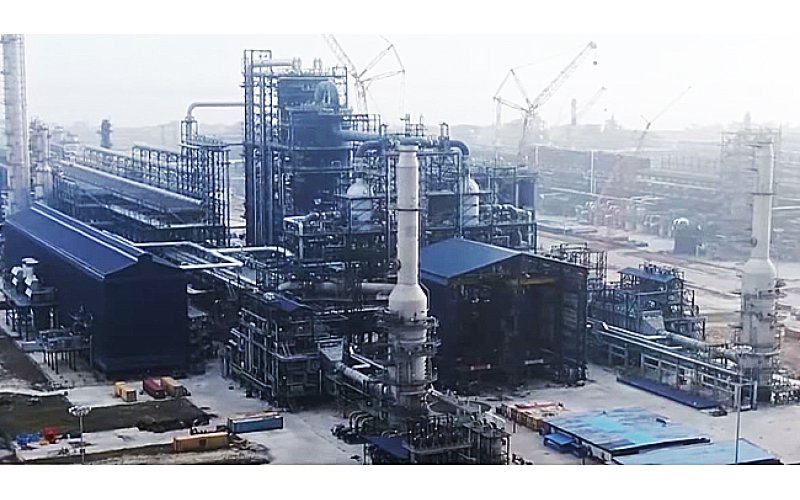
Nigeria’s four refineries — located in Port
Harcourt, Warri, and Kaduna — have a combined installed capacity of 445,000
barrels per day (bpd) but have remained largely idle for decades despite
multiple turnaround maintenance efforts costing billions of dollars.
Special Adviser to President Bola Tinubu on Energy,
Olu Verheijen, disclosed this in an interview with Bloomberg TV
anchor Joumanna Bercetche on the sidelines of the Abu Dhabi
International Petroleum Exhibition and Conference (ADIPEC) on Tuesday.
“It’s one of the options that you have to consider if
you find the right technical partner with the right capital,” Verheijen said.
The refineries, owned by the Nigerian National
Petroleum Company Limited (NNPCL), have long been propped up by subsidies.
But, according to Verheijen, the recent removal of fuel subsidies has created a
more transparent and market-driven environment that could support
private participation.
“Now that we’ve removed the subsidies, we’ve removed
the distortions in that market,” she said.
Reform Agenda And NNPC Restructuring
Verheijen explained that the Tinubu administration’s energy
reform agenda seeks to restore market efficiency and transparency, ensuring
that petroleum operations are conducted on commercially sustainable terms.
Her comments come amid the continued shutdown of the Port
Harcourt refinery, which was closed on May 24, 2025, for a scheduled
30-day maintenance that has now stretched beyond 80 days without significant
progress.
Last week, NNPCL Chief Executive Officer Bayo
Ojulari announced on X (formerly Twitter) that the company was seeking technical
equity partners to manage and operate the Port Harcourt, Warri, and
Kaduna refineries at international standards.
“We are looking ahead with optimism to ensure our
refineries operate effectively,” Ojulari wrote.
Verheijen also hinted that the long-anticipated
Initial Public Offering (IPO) of NNPCL remains part of the government’s
long-term strategy.
“What’s really important to the shareholders is that
we have an NNPC that’s a lot more transparent, a lot more efficient, and
delivers,” she added.
Comments:
Leave a Reply