

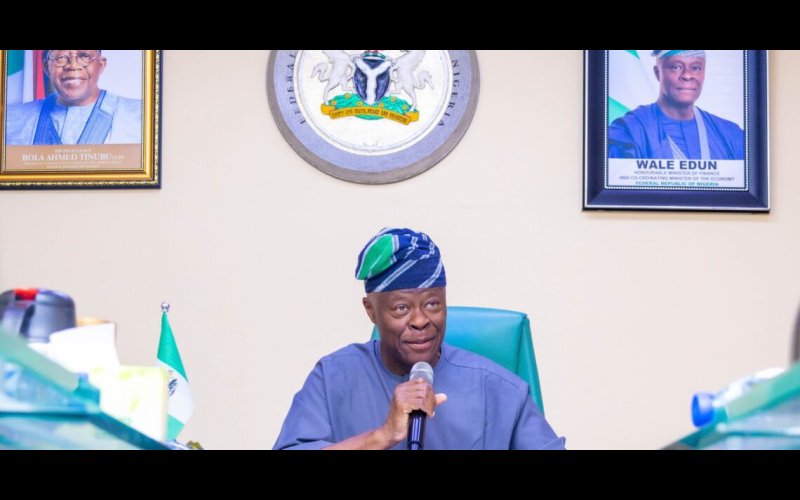
The Federal Government has suspended the 4% Free on
Board (FOB) charge recently introduced by the Nigeria Customs Service (NCS) on
imported goods.
The directive, which takes immediate effect, was
conveyed in a letter signed by R. O. Omachi, Permanent Secretary, Special
Duties, Federal Ministry of Finance.
According to the Ministry, the decision followed
extensive consultations with industry stakeholders, trade experts, and
government officials, who warned that the levy could drive up import costs,
reduce competitiveness, and worsen inflation.
“Following extensive consultations…it has become clear
that the implementation of the 4% FOB charge poses significant challenges to
trade facilitation, the business environment, and economic stability,” the
statement noted.
The government said the suspension would allow for a
comprehensive review of the levy’s framework and economic impact, with the goal
of ensuring that future revenue measures are fair, efficient, and supportive of
business growth and economic stability. Customs officials have been directed to
strictly comply with the order.
Background
The 4% FOB levy was introduced in August 2025 as a unified import fee meant to
replace multiple charges, including the 7% cost of collection and the 1%
Comprehensive Import Supervision Scheme (CISS) processing fee.
It was designed to streamline charges, enhance
transparency, and boost revenue collection. However, importers alleged that
instead of replacing the existing fees, the levy was being collected in
addition to them, effectively raising port clearing costs.
The combined effect of the 4% levy, 7% cost of
collection, and 1% processing fee increased importation costs — particularly
for vehicles — with traders warning that the added burden was being transferred
to consumers.
With the suspension now in place, the Federal
Government will engage stakeholders to review the levy’s framework and develop
a more balanced and effective revenue collection system.
Comments:
Leave a Reply