

The Federal Government will disburse ?32.9
billion to states and health facilities before the end of October 2025
under the Basic Health Care Provision Fund (BHCPF), according to the Coordinating
Minister of Health and Social Welfare, Prof. Muhammad Pate.
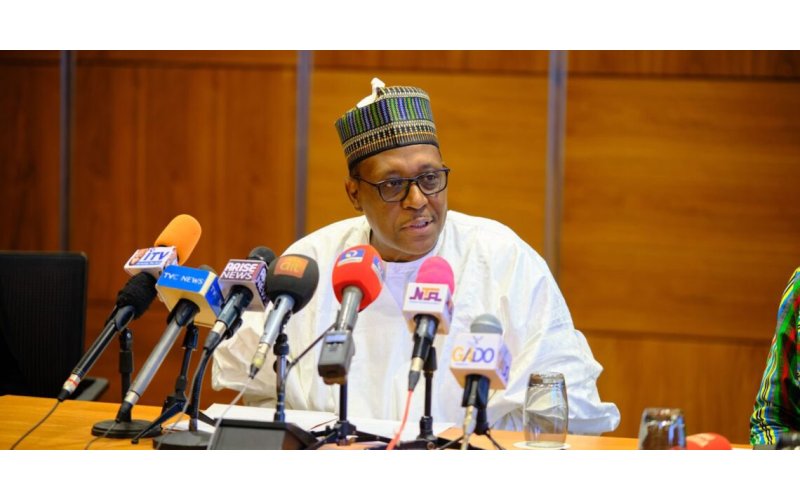
Pate made this known in a statement on Wednesday,
following a meeting of the Expanded Ministerial Oversight Committee for the
Health Sector Renewal Investment Initiative (NHSRII).
He said the committee reviewed progress made in
strengthening Nigeria’s health system in line with President Bola Tinubu’s
directive for transparency, accountability, and efficient use of public and
partner resources.
“We launched the BHCPF Guideline 2.0, which
institutionalizes performance-based financing and accountability and will guide
the disbursement of ?32.9bn to states and facilities before the end of
October,” Pate stated.
According to him, supported facilities will increase
from 8,800 to 13,000, with a pathway to 17,000 under the HOPE
Programme, while quarterly allocations per facility have been raised from ?300,750
to between ?600,000 and ?800,000.
He noted that BHCPF-supported facilities are
already outperforming others in immunisation, skilled birth attendance, and
general service utilisation. To enhance transparency, a Joint Task Force
with ICP Nigeria has been activated to monitor fund use at both
community and facility levels.
Major Health Sector Gains
Pate highlighted significant progress since the NHSRII
was launched in 2023, including:
He added that preventive health efforts have also
advanced, citing the integrated measles, rubella, polio, and neglected
tropical disease (NTD) campaign, which achieved 92% coverage for
measles and rubella in northern states.
The Minister disclosed that the National Emergency
Medical Service and Ambulance System (NEMSAS) served over 11,000
patients in the last quarter, disbursing ?470 million and operating
in 150 LGAs. Nigerians in 30 states can now access emergency
services by dialling 112, with full nationwide coverage expected by December
2025.
Pate said the government is also tackling data
integrity issues, including overreporting of maternal and child deaths, through
improved verification systems, digital reporting, and integration of the National
Identification Number (NIN) into health records.
He announced that a Mini-Demographic and Health
Survey (Mini-DHS) will be conducted in 2026 to independently assess
national progress in maternal and child health outcomes.
“Under President Tinubu’s leadership, Nigeria’s health
sector is redefining accountable governance — anchored on results, driven by
integrity and inclusion, and turning reforms into real improvements in people’s
lives,” Pate said.
Comments:
Leave a Reply