

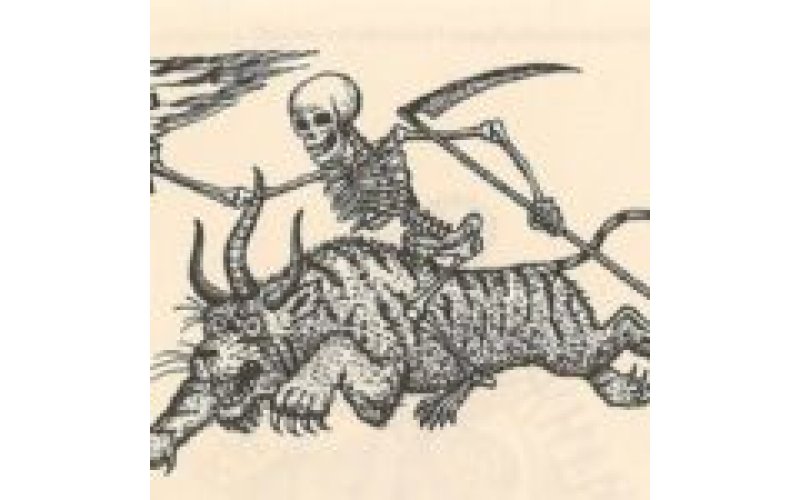
The proverb “He who rides a tiger is afraid to
dismount” means that once you have embarked on a dangerous or troublesome
course of action, it is often more perilous to stop or back down than to
continue, even if the journey becomes tough.
For those politicians who decide to ride on the back
of the ‘tiger’, for their political journey, the problem is not how to mount,
but how to dismount without ending up as sumptuous supper for the cat.
So it looks now for Governor Simi Fubara of Rivers
State, the level 14 civil servant-inexperienced politician that was handpicked
by the ex governor of the state, Nyesom Wike and who since assumption of
office, has tried his amateurish skills to dismount the tiger, without success.
Like Jonah who disobeyed God, Fubara has ended up in
the belly of ‘Whale—Nyesom Wike.’
The troubled governor Fubara now has the opportunity
to ‘repent’ in the next six months he will spend inside ‘Whale Wike’, and pray
to him and repent from his disobedience.
The six months state of emergency declared in River
State will provide a perfect condition for Fubara’s adversaries to reset the
political dynamics in the state.
One thing is certain, the sun may set so early on
Fubara’s political fortune.
Fubara is the perfect example of majority of Nigerian
politicians, who believe that the ends will always justify the means in
politics.
The Machiavelli principle had suggested that any
method, even morally questionable ones, is acceptable if the desired outcome is
deemed worthwhile. And in Rivers State, President Bola Ahmed Tinubu declaration
of State of Emergency in River State is acceptable—depending on the side of
table you are seated.
In the beginning, from a default position, Wike, in
his desperation to aniont a successor that would deodorize any skeleton,
settled for a seemingly lustre-iridescent glazed appointee—Amaopusenibo
Siminalayi Fubara, his Accountant General of the state.
The desperation of these two sneaky, cunning, moral
lacking Machiavellians have caused the people of Rivers State, long-term
negative consequences as a result of their actions, taken based on personal
interest.
For Wike, he has rightly adopted the principle of
Machiavelli in his book, the ‘Prince’—that: “It is better to be feared than
loved”, which illustrates his adaptation to what he believed to be the Medici’s
ruling philosophy—brash, coarse, bristly and assertive.
For thousands of years, this iron-fist rulership style
has worked around the world and for some lucky political rulers like Wike, they
believe that one can only rule through fear, through oppression, and through
trepidation.
And since, it has worked for them, then the principle
stands to reason that, “the outcome justifies the deeds”, a characterization of
the “belief of an oppressor and a tyrant; someone who is not an impartial judge
on the fact of their own wrongdoing.”
The decay in Nigeria’s political development is
principally due to this branch of political philosophy which sums up as
‘rule-consequentialism.’ Steadily, and sadly too, “…the ends justify the means”
and this hysterical political desperation has provided a justification for the
unjustifiable fights between godfathers and their godsons in Nigeria’s
political environment.
Comments:
Leave a Reply