

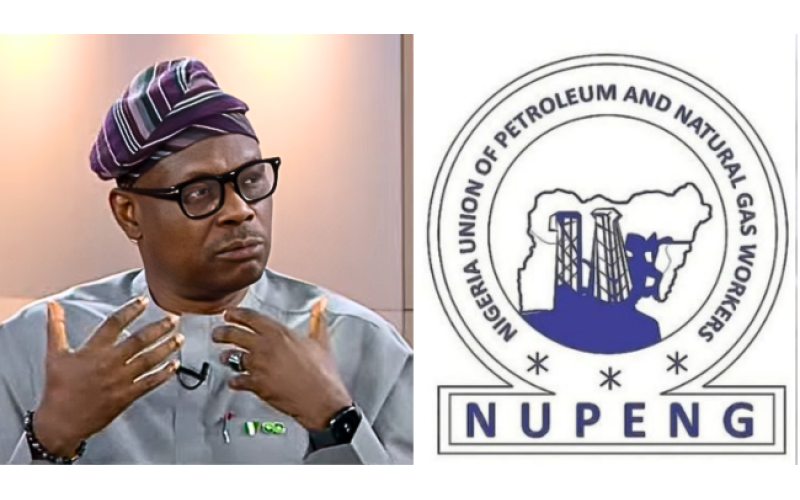
Minister of State for Health, Isaq Salako, has
cautioned that the planned nationwide strike by the Nigeria Union of Petroleum
and Natural Gas Workers (NUPENG) could severely disrupt hospital operations
across the country, given their heavy reliance on fuel-powered generators.
Speaking on Channels Television’s Sunrise Daily on
Monday, Salako said:
“A strike by NUPENG will obviously affect the health
sector because, as it is today, our hospitals are 65 to 80 per cent dependent
on diesel and petrol generators. So, if there is a strike, it will also have an
adverse effect on the health sector, and you obviously don’t want that.”
He appealed to both parties in the dispute to “allow
reason to prevail,” stressing that the interests of ordinary Nigerians must
remain central in the ongoing negotiations.
NUPENG had last week announced that its members would
down tools from September 8, 2025, in protest against alleged attempts by the Dangote
Refinery to stop its compressed natural gas (CNG) tanker drivers from joining
labour unions. While the Petroleum Tanker Drivers (PTD) and the Direct Trucking
Company Drivers Association (DTCDA) dissociated themselves from the strike,
NUPENG reaffirmed its decision to proceed.
The Minister of Labour and Employment, Muhammad
Maigari Dingyadi, in a separate statement, appealed to the union to suspend the
strike, warning of the dire economic consequences. He disclosed that all
parties had been invited to a conciliation meeting on Monday, September 8,
urging the Nigeria Labour Congress (NLC) to also withdraw its red alert issued
to affiliate unions.
“The petroleum sector is very important to this
country. It constitutes the core of the economy. A strike, even for just a day,
will have an adverse impact, leading to heavy revenue losses running into
billions of naira and causing untold hardship for Nigerians,” Dingyadi said.
Meanwhile, human rights lawyer Femi Falana, SAN, has
thrown his weight behind NUPENG, arguing that the Dangote Group’s policy
contravenes Section 40 of the 1999 Constitution, the Trade Union Act, the African
Charter on Human and Peoples’ Rights, and various International Labour
Organisation conventions that guarantee workers’ freedom of association and
collective bargaining.
The looming strike has heightened tensions nationwide,
with stakeholders warning that disruptions in fuel supply could paralyse
critical sectors, especially healthcare and transportation.
Comments:
Leave a Reply