

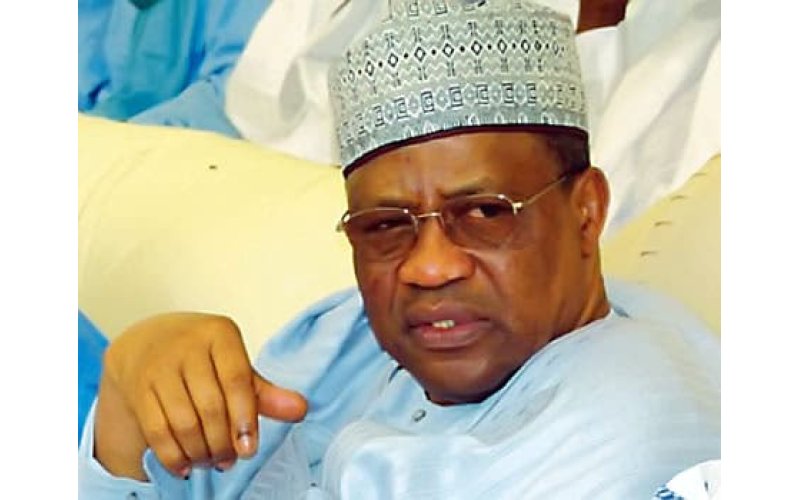
Ibrahim Babangida’s memoir, “A Journey in Service,”
has expectedly dominated public discourse throughout the last week; even
before, and after its launch on Thursday, 20 February at the Transcorp Hilton
Hotel, Abuja. Given IBB’s stature, the event assembled the creme de la creme of
Nigeria’s political and socio-economic empire; and of course, mouth-watering
donations to support the author’s Presidential Library Project were collected.
Anything and everything IBB, must be big and
expectedly so, because here is a leader that cannot be pigeon-holed into any
ethnic conclave, a humanist and a completely detribalised Nigerian, who
cultivated friendships across the political and tribal divides in the country.
The upshot of that kind of life is the gathering of
that day.
It was quite a panoply; it spoke volumes to his
pan-Nigerian orientation with cosmopolitan mindset. IBB is from the North
alright, but gathering for his sake was not dominated by Northerners, but by
Nigerians drawn from all walks of life.
It is the reason why anything he does and or says
still reverberates to the far ends in the land.
As a Military President, he consciously and
deliberately promoted this culture of national unity and cohesion, and like he
would often say, “those of us who fought in the war of unification, would
always love to see a united Nigeria regardless of the imperfections, to
extenuate the calls for a different structure.
Diverse opinions, analyses, imputations and
interpretations have been given by those who have read the memoir in part or
full, and even by those who obviously are yet to read it.
Pirated online copies have been widely circulated and
I won’t be surprised to see pirated hard copies of the book on the streets very
soon- that devil still hasn’t been buried!
The stories within stories detailed in the book are
expected to draw certain conclusions and open new cogitations of other robust
subject matters; but, the authorial impressions of the writer cannot be taken
away- he is a person at peace with his persona.
I chuckle at certain inferences and deductions far
from the rationale of this book, but typical of anything IBB, such warped
interpretations are to be expected.
IBB was almost being demonized for “refusing” to write
his memoir, now that he has written one, certain persons and opinion moulders
still bridle at the content and the extent of his narration. But he remains the
main actor of his story-telling.
Of all the many anecdotes that are contained in the
memoir, his handling of the June 12 episode gains the most traction, as
expected.
For the very first time, IBB publicly documented that
epochal story. His prowess as a raconteur makes the piece inseparable from
one’s focus until all is scoffed.
He unveiled the Byzantine nature of 12 June, the very
actors that necessitated the actions taken on the 12 June issue, which
culminated in the annulment of the election.
No doubt, Late Sani Abacha got the lion’s share of the
reason d’etre for that annulment. This has sparked derisive comments from Late
Abacha’s family; some denigrating, and others, emotionally nuanced to paint IBB
as a “weakling.”
The truth must be told; right from Professor Humphrey
Nwosu’s account of the June 12 debacle as captured in his book, Late Abacha
featured as the main culprit.
In fact, to get to the point of even going ahead to
conduct the election was a herculean task for Professor Nwosu, followed by the
traipse of counting the votes until the election was deemed to be inconclusive.
It was a coup plot within several other coups. A
factionalized military with different cells championing different interests,
one trying to out-manouver the other in their desperate desires to gain
control.
Late Abacha was allowed to swing things his way,
because of the role he had played in the emergence of IBB as head of state ab
initio.
The soft spot rooted in IBB for him, because of the
full fealty he showed in the coups of 1983, 1985 and the quelling of the April
1990 Orkar coup were parts of the reasons why IBB was “deliberately helpless”
in checkmating him and his onslaught.
Abacha mounted heavy pressure on IBB to allow him
taste presidential powers; his push it appears was inexorable.The idea of
returning to civil rule was never in sync with late Abacha.
He consistently told Prof Nwosu of the unpreparedness
of the Electoral umpire citing security concerns in tones that conveyed his
anger. Nwosu’s account finds correlation with the final position of IBB’s as
aptly captured in his memoir, “these inside nefarious forces”…
In essence, IBB wasn’t telling us anything new. Abacha
was desperate for power, and he manipulated his friend until the friend
capitulated; period!
Such plots and counter-plots are the ingredients that
dominate the struggle for power anywhere in the world especially under a
military dispensation.
Even in our democracy today, the scramble for votes to
secure power is often fraught with similar condiments.
The power game can only be understood by those who
play and wield it. It is the reason why the country was alarmed that MKO fell
for the palace coup that had his own imprimatur.
After turning down the option of becoming the head of
the interim government, which in hindsight would have been his easy access to
power.
Accepting to be part of late Abacha’s palace coup was
his undoing. Ditto for jetting out of the country, thereby allowing Abacha the
freedom to execute his plot; then going ahead to suggest some appointees in
that government, is bemusing.
This power game is certainly a crazy stimulant; able
to make men wild in their thoughts and actions.
How could you have gone to bed with a man who never
wanted June 12 election to hold in the first place? Power has its addictive
properties; the more you look, the less you see.
It is not served ala carte. It is a struggle between
reality and promise. Even in contemporary democratic nations, the struggle for
votes wears its own crown of thorns.
But look how this man, “the greatest tormentor” was
able to pull people from all the nooks of this country.
While some focused on 12 June, others credited him
with opening up the private sector in Nigeria.
That still rebounds to his credit, regardless.
Babangida left the power rostrum at fifty two years old, and wrote his memoirs
after thirty two years of this exit and the response has been so thumping.
Love him passionately, or hate him intensely, he’s not
the road of the middleman.
So, those who are trying to misrepresent his narration
in his memoirs need to cede to the former military president the opportunity to
assume that authorial authority; he alone knows his story fully; he alone has
that authorial license to tell the aspect that he feels like telling, to suit
his worldview and the intricate logic of his power involvement.
To deny him that authority is to choose to write the
man’s story for him.
The June 12 story has always been a sore point of his
most eventful era of his leadership in Nigeria; the discourse has been promoted
to seemingly overshadow his many other achievements.
Aliko Dangote’s reminder that IBB created the
country’s Private Sector towards a new socio-economic engineering of the
country, was the antipodal to the negativity of the June 12 narrative fully
appropriated to him.
I had to remind a spritely young attendee to his
consternation that the Transcorp Hilton, venue of the event, was actually built
by IBB, ditto for so many other milestones and trails he blazed.
The June 12 story cannot assume the only story of IBB.
It has been made to become the story of the other mind.
But just like IBB said; it was a most troubling period
of his life, that has shaped his perception of people, and his understanding of
the intricacies of power and its crazy stimulant.
If a man can continue to sustain such huge relevance
in the country, thirty-two years after his exit from power, it must be the
upshot of something; something special.
May be his personality and his relationship with
humanity and his God. His memoir will continue to speak for him, way into the
future, that all may come to know and believe what really transpired.
Comments:
Leave a Reply