

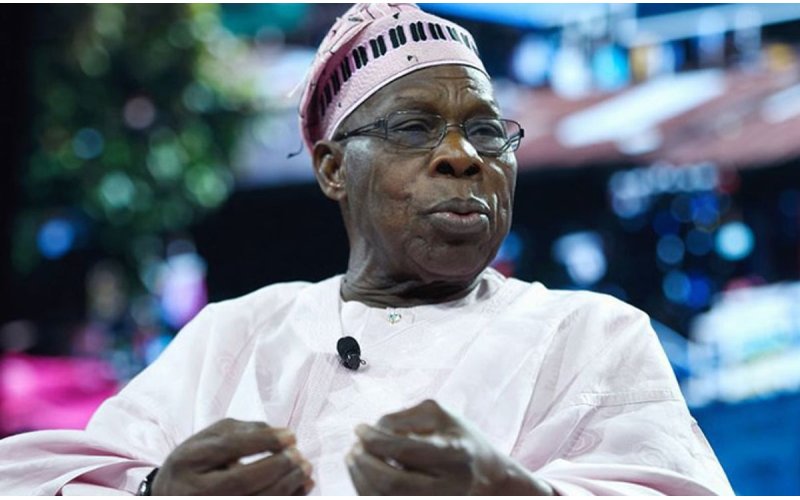
Former President Olusegun Obasanjo has taken a swipe
at President Bola Tinubu, describing Nigeria’s current state under his
leadership as “glaringly indicative of failure” and lamenting the nation’s
struggles with corruption and mismanagement.
In a statement issued by his media aide, Kehinde
Akinyemi, Obasanjo made these remarks during his keynote address at the Chinua
Achebe Leadership Forum held at Yale University, New Haven, Connecticut, USA.
“As the world can see and understand, Nigeria’s
situation is bad,” Obasanjo said. Referring to Tinubu’s administration, he
added, “The failing state status of Nigeria is confirmed and glaringly
indicated and manifested for every honest person to see.”
In his speech titled Leadership Failure and State
Capture in Nigeria, the former president attributed the nation’s challenges to
pervasive corruption and a lack of competent leadership. He said:
“The more the immorality and corruption of a nation,
the more the nation sinks into chaos, insecurity, conflict, discord, division,
disunity, depression, youth restiveness, confusion, violence, and
underdevelopment. That’s the situation mostly in Nigeria in the reign of
Baba-go-slow and Emilokan.”
Obasanjo also referenced Chinua Achebe’s seminal 1983
work, The Trouble with Nigeria, agreeing with the assertion that the country’s
core issue lies in leadership failure. He remarked, “The trouble with Nigeria
is simply and squarely a failure of leadership. There is nothing basically
wrong with the Nigerian character… The Nigerian problem is the unwillingness or
inability of its leaders to rise to the responsibility, to the challenge of
personal example which are the hallmarks of true leadership.”
He contrasted Achebe’s moderate critique with more
severe analyses by American scholars, including Robert Rotberg and former U.S.
Ambassador to Nigeria, John Campbell, who described Nigeria as “a fully failed
state of critical geopolitical concern.”
Drawing from definitions by the World Bank and
Transparency International, Obasanjo elaborated on the concept of state
capture, which he described as a form of corruption where powerful individuals
manipulate a nation’s policies, economy, and resources for personal gain. He
cited examples of how public institutions in Nigeria are being exploited by
political elites to the detriment of the nation’s development.
“State capture can seriously affect economic
development, regulatory quality, the provision of public services, quality of
education and health services, infrastructure decisions, and even the
environment and public health,” he warned.
Reflecting on Chinua Achebe’s legacy, Obasanjo
described the renowned author as “a great and distinguished Nigerian” whose
works and values continue to resonate.
The former president’s critique has once again sparked
conversations about Nigeria’s leadership challenges and the need for a
transformative approach to governance.
Comments:
Leave a Reply