Friday, April 24th 2026

Lagos Demolishes Illegal Structures Blocking Ebute Metta Collector to Curb Flooding


Lagos Demolishes Illegal Structures Blocking Ebute Metta Collector to Curb Flooding
122 views
    Share :

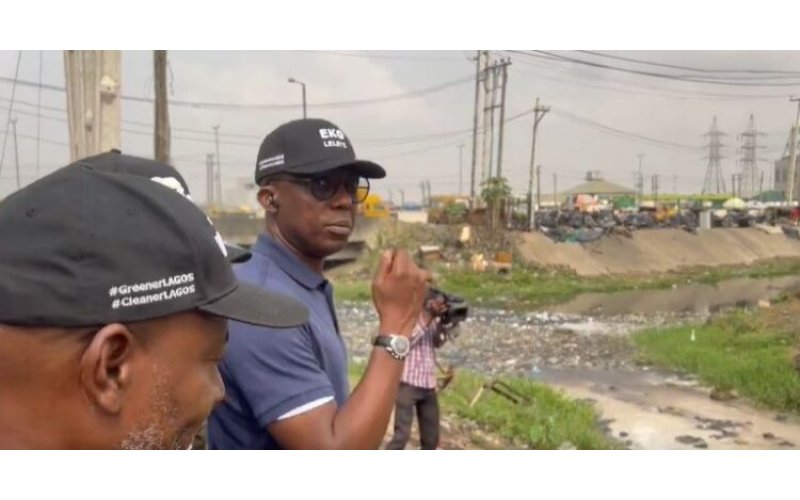
The Lagos State Government on Thursday cleared illegal structures obstructing the Jebba/Kano collector in Ebute Metta, in an effort to improve stormwater flow and reduce flooding risks in the area.

The announcement was made by the Commissioner for Environment and Water Resources, Tokunbo Wahab, who shared video footage on X showing enforcement officers demolishing concrete blocks and cutting through metal barriers that had clogged the drainage channel.

“Our enforcement team conducted the removal of illegal structures built along the Jebba/Kano collector, Ebute Metta. These encroachments have obstructed the free flow of stormwater and contributed to flooding in the axis,” Wahab said.

He urged residents to respect drainage rights-of-way and avoid erecting structures that compromise public infrastructure, stressing that keeping drains free is critical to safeguarding lives and property.

Wider Enforcement Drive

The Ebute Metta exercise follows a series of crackdowns on illegal buildings erected along waterways and drainage paths across Lagos.

  • Recently, the government demolished buildings constructed on the Ikota River setback in Lekki, where structures blocked natural water channels and worsened flash flooding along the Lekki–Ajah corridor.
  • Affected structures fell within the alignments of systems 156, 157, 44, 44A, and 46 of the Ikota River.

Flood-Resilience Strategy

Beyond demolitions, Lagos is pursuing a citywide flood-mitigation plan, with short-, medium-, and long-term measures:

  • Next 24 months: Creation of the Lekki Blue-Green Network, linking estate lakes, canals, and green corridors to store and gradually release water; installation of flap gates and pumps at tide-sensitive outfalls; and stricter canal enforcement.
  • Ongoing works: Maintenance of 579 km of secondary collectors and 309 km of primary channels; rapid-response clearance of 444 km of drains; restoration of 40.3 km of encroached channels; and contracts for 218 new channels, expected to add 1,500 km to the drainage grid.
  • Immediate measures: Clearing silt and debris at choke points, installing culvert debris screens, and piloting estate detention lakes to temporarily hold excess rainwater.
  • 2–8 years ahead: Deployment of pumped drainage cells in low-lying areas, restoration of wetlands, and updated building codes requiring on-site water retention systems in new developments.

The Lagos State Government reiterated that its flood-control drive is not only about enforcement but also about building resilience against extreme weather and rapid urbanisation pressures.


Comments:

Leave a Reply

Your email address will not be published. Required fields are marked *