

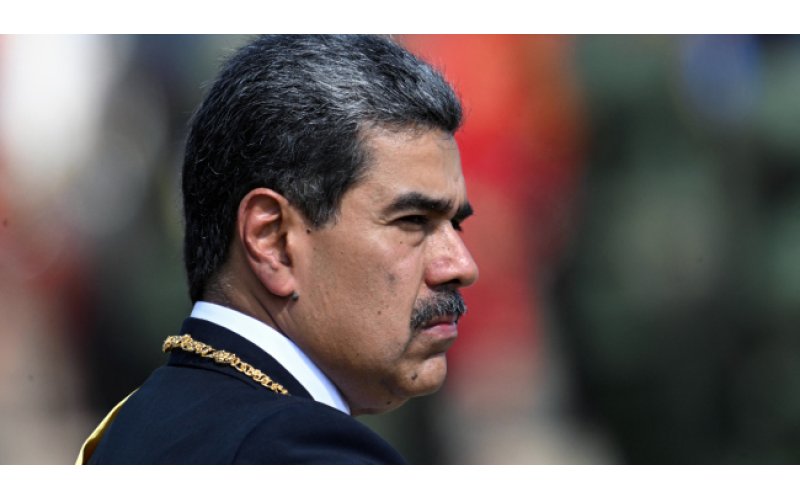
Deposed Venezuelan president Nicolás Maduro on
Monday pleaded not guilty to U.S. charges of narco-terrorism during his first
court appearance in New York, just two days after being seized by American
forces in a dramatic operation in Caracas.
Appearing before a federal judge in Manhattan, the
63-year-old Maduro described his arrest as a kidnapping, insisting he remained
Venezuela’s legitimate leader.
“I’m innocent; I’m not guilty,” he told the court, according to U.S. media
reports. “I’m still the president of my country.”
Maduro’s wife, Cilia Flores, who was also
captured during the operation, entered a not-guilty plea.
The arrests followed a surprise early-morning raid on
Saturday by U.S. commandos, reportedly backed by warplanes and a significant
naval deployment. The operation triggered shockwaves across Latin America and
beyond.
In a series of statements over the weekend, U.S.
President Donald Trump said Washington was now effectively overseeing
Venezuela’s transition, with a focus on rebuilding—and controlling—the
country’s vast but dilapidated oil industry.
The move sparked international concern. United Nations
Secretary-General António Guterres, addressing an emergency UN Security
Council meeting, called for “respect for the principles of sovereignty,
political independence, and territorial integrity.”
Regional leaders also reacted sharply. Mexican
President Claudia Sheinbaum said the Americas “do not belong to anyone,”
while Colombia’s President Gustavo Petro issued a fiery condemnation,
warning he was prepared to resist U.S. actions.
Maduro has been in power since 2013, succeeding
socialist leader Hugo Chávez. The United States and European Union have
long accused him of clinging to power through rigged elections, jailing
opponents, and presiding over widespread corruption.
Inside Venezuela, the fallout has been swift. Around
2,000 Maduro supporters rallied in Caracas on Sunday, some riding motorcycles
and waving national flags. Lawmakers loyal to him chanted “Let’s go, Nico!”
during a session of the Venezuelan parliament on Monday.
Despite the upheaval, the Trump administration has
signaled it may work with remnants of Maduro’s inner circle—provided they meet
U.S. demands. Delcy Rodríguez, Maduro’s former vice president and now
interim leader, softened her tone on Sunday, saying she was open to
“cooperation.”
Trump has indicated little interest in backing
opposition figures previously regarded as winners of disputed elections.
Instead, he has been blunt about U.S. priorities.
“We need total access,” Trump said when asked what
Washington expected from the interim leadership. “We need access to the oil and
other things in their country that allow us to rebuild their country.”
Venezuela holds the world’s largest proven oil
reserves, but years of sanctions, mismanagement, and underinvestment have left
production facilities in poor condition. Following the announcement, shares in
major U.S. oil companies—including Chevron, ExxonMobil, and ConocoPhillips—rose
sharply on Wall Street.
Trump’s actions have fueled debate at home and abroad
about the scope of U.S. power. Over the weekend, he also claimed communist Cuba
was “ready to fall” and reiterated calls for U.S. control of Greenland,
a territory of Denmark.
While U.S. officials say there are currently no
American ground troops in Venezuela, a large U.S. naval force, including an
aircraft carrier, has been deployed in the Caribbean. Washington has also
threatened further military action and maintains an oil blockade as economic
leverage.
Details of the Caracas operation were still emerging
Monday. Cuban authorities claimed 32 Cubans were killed in the assault. U.S.
officials said no American troops were killed, though some sustained injuries.
Outside the Manhattan courthouse, protests reflected
the divided global reaction.
“We say no to U.S. wars and intervention,” said Sydney Loving, a
31-year-old activist. “It doesn’t make people safer; it makes Wall Street
richer.”
Others welcomed Maduro’s downfall. Angel Montero,
a Venezuelan-born U.S. resident, called it “the best gift I ever received.”
“I’m going to thank Donald Trump,” the 36-year-old
said.
As legal proceedings begin in the United States,
Venezuela faces a period of deep uncertainty—marking a dramatic end to a
quarter-century of leftist rule and opening a new, contentious chapter in
hemispheric politics.
Comments:
Leave a Reply