

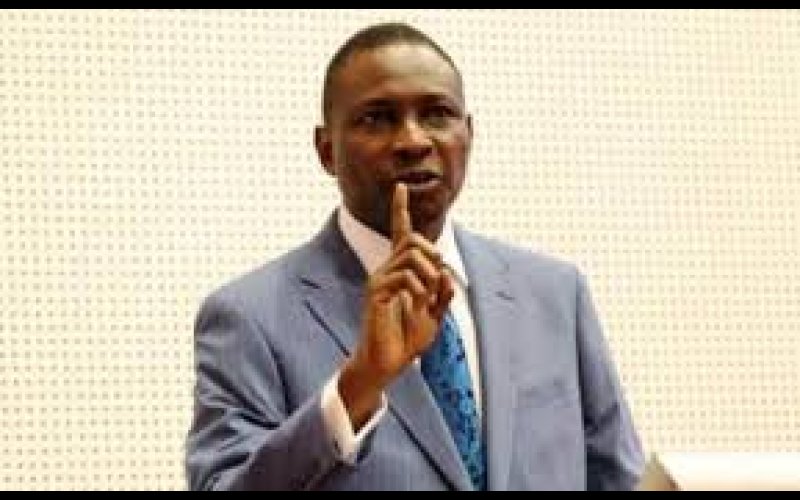
The President, Network of Anti-Corruption Institutions
in West Africa, NACIWA, and Executive Chairman,
Economic and Financial Crimes Commission, EFCC,
Mr. Ola Olukoyede has stated that the challenge posed by
corruption in West African member states and in the region was
surmountable.
He stated this on Thursday, March 20, 2025 in an
insightful opening address as NACIWA President as he led a regional
dialogue on combating corruption and addressing instability across West
Africa and the Sahel regions.
“While the challenges we face are formidable, they are
not insurmountable. It is essential that we maintain our focus on pragmatic,
non-political approaches that emphasize technical solutions and shared best
practices over partisan differences,” he said.
The high-level roundtable, supported by the
United Nations Office for West Africa and the Sahel (UNOWAS), focused on the
theme "Exchanging Views on the Nexus between Corruption, Sociopolitical
Crises, and Instability in West Africa and the Sahel: Lessons Learnt and Way
Forward."
As NACIWA President, the EFCC’s boss underscored
Nigeria's leadership role in the regional fight against
corruption, reaffirming the Commission's dedication to strengthening
cross-border collaboration and information sharing towards effective combat of
financial crimes.
He reiterated EFCC’s unflinching commitment to
Nigeria’s anti-corruption crusade and emphasized the importance of regional
cooperation in addressing the transnational nature of corruption. He also
stressed the Commission’s commitment to international best practices and
highlighted its ongoing efforts to engage with regional and international
partners in dismantling corruption networks that threaten peace, security,
and development across West Africa.
The dialogue centered on analyzing recent corruption
trends brought out in Transparency International’s Corruption Perception
Index with particular reference to West Africa and Sahel region and evaluated
how corruption undermined governance structures and contributed to instability
in the West African region.
Participants were taxed to evolve actionable
recommendations for promoting transparency and accountability within the
region.
Comments:
Leave a Reply