

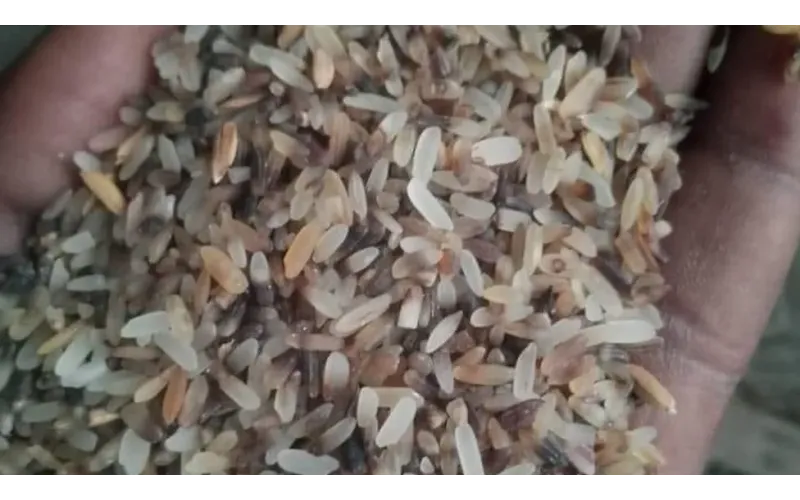
The rising cost of living continues to bite,
many in northern Nigeria are turning to rice grains that millers normally reject
after processing or sell to farmers to feed their fish.
These are referred to
in the Hausa language, widely spoken in the north, as afafata, which means
"battling" because they are literally a battle to cook and eat as the
grains are so hard.
"A few years ago,
people didn't care about this type of rice, and we usually threw it away along
with the rice hulls, but times have changed," Isah Hamisu, a rice mill
worker in the northern city of Kano,
Despite the grains
being broken, dirty and tough, afafata's cheaper price has made it more
attractive for humans and helped poorer families to be able to afford to eat
one of the staple foods in the country.
Fish farm owner Fatima
Abdullahi said her fish love it but because people are now eating afafata, its
price has risen.
Prices in Nigeria are
increasing at their fastest rate for nearly 30 years. On top of global
pressures, President Bola Tinubu's cancellation of the fuel subsidy plus the
devaluation of the currency, the naira, have added to inflation.
A standard 50kg (110lb)
bag of rice, which could help feed a household of between eight and 10 for
about a month, now costs 77,000 naira ($53; £41). This is an increase of more
than 70% since the middle of last year and exceeds the monthly income of a
majority of Nigerians.
In the face of this
many are struggling to cope and, in some states, there have been cost-of-living
protests.
Earlier this month in
Niger state, central Nigeria, protesters blocked roads and held placards saying
that they were being suffocated by the rising prices.
A few days later there
was a similar demonstration in Kano in the north-west. In the aftermath,
Governor Alhaji Abba Kabir Yusuf admitted there was starvation in his state and
said a solution must be found.
The solution, for now,
for some is found in afafata.
Hajiya Rabi Isah,
based in Kano state, said that if it were not for this type of rice her
children would go hungry as she cannot afford the normal kind.
"Normal rice is
4,000 naira ($2.70) per bowl which is beyond my means, I can only afford
afafata which is 2,500 naira ($1.69) now," she said. One bowl of rice from
the market can feed an average family in Kano for a day.
"Without afafata,
feeding my family would be a major issue for me."
Market sellers have
also noticed a difference.
Saminu Uba, who works
in Kano's Medile market, said the afafata side of his business is booming.
"Most people can
no longer afford normal rice and they come for this which is cheaper even
though it tastes less good," he said.
One of his customers,
Hashimu Dahiru, admits people are having to find ways of adapting.
"The cost of
goods is alarming - in just two months the price of everything has doubled,''
he said.
"Our wives spend
hours removing stones and dirt from the rice before cooking and even then it
ends up tasting not nice, but we have to eat to survive."
The presidency has
said it is doing all it can about the situation, including the distribution of
more than 100 tonnes of grains such as rice, millet and maize in the hope that
it would cushion the effects of inflation and help lower the market price.
But the president's
aide Bayo Onanuga upset many recently when he said that Nigeria still had one
of the lowest costs of living in Africa.
The increasing price
of rice is not a new problem though.
President Tinubu's
predecessor, Muhammadu Buhari, banned the importation of rice to encourage more
Nigerian farmers to grow the crop, but local producers have been unable to meet
the demand.
Before then Nigerian
markets were filled with rice from Thailand at an affordable price for many.
Mr Tinubu has lifted
import restrictions, but now the shortage of foreign currency and the falling
value of the naira has made bringing in rice trickier.
Comments:
Leave a Reply