

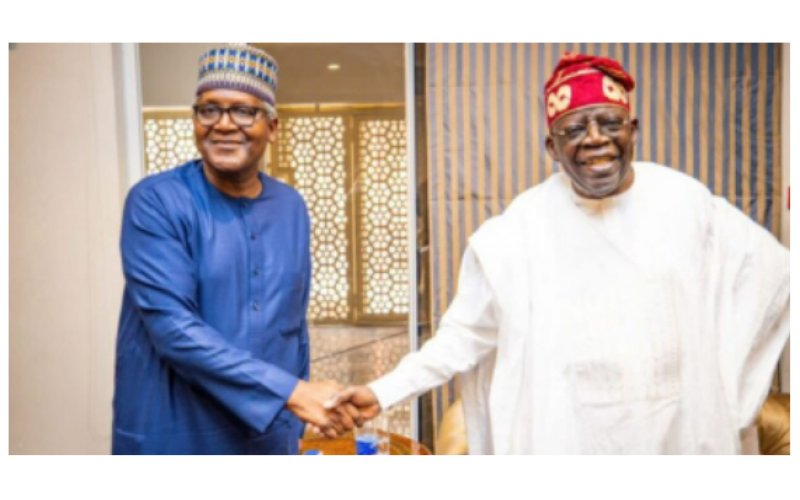
Nigerians woke up on Tuesday 28 October 2024 to
another petrol price hike, the fourth within 18 months under President Bola
Tinubu’s administration with the outlets of the Nigerian National Petroleum
Company Limited (NNPCL) increasing the pump price of Premium Motor Spirit (PMS)
or petrol from 897 Naira to 1,025 Naira (1,600 Naira=1$USD).
Before the president announced the “end to fuel
subsidies” during his inauguration speech in May 2023, the NNPCL sold PMS at
198 Naira per litre. That controversial presidential announcement took the
price to 540 Naira, and in July 2023 it went to 617 Naira, before climbing to
879 Naira per litre last September, and then the latest increase.
The NNPCL prices are usually the baseline. Fuel
usually sells higher at private filling stations going for between 1,000 Naira
and 1,400 Naira per litre, depending on the location in the country.
The September price rise coincided with the date that
the Dangote Refinery, a $USD20-billion project set up by Africa’s richest man
Aliko Dangote, rolled out PMS to save Nigeria’s blushes as a major oil producer
that imports refined petroleum products and endures embarrassing shortages
because its four state-run refineries are in disrepair.
The Port Harcourt refinery which the government
promised would resume production in September has not do so and instead of the
anticipated relief from Dangote’s private refinery, Nigerians are experiencing
inexplicable increases in fuel prices.
Due to irregular electricity supply, compounded by the
frequent collapse of the National Grid, the Nigerian economy depends heavily on
petroleum products, and every increase in price affects manufacturing and
production by industries and medium-and small-scale businesses.
The additional costs including in transportation are
then passed on to the final consumers making the cost of living very high.
This, and other tough economic policies introduced by the Tinubu government,
including the devaluation of the Naira, have resulted in more hardships and
sporadic street protests against “hunger and Bad governance.”
Many Nigerians bearing the brunt of hardship, have
discountenanced assurances by government officials that positive changes are in
horizon.
According to the Nigeria Bureau of Statistics, oil
exports account for about 80% of the country’s toral revenue and the greatest
tragedy is that transactions in Nigeria’s oil industry remain opaque and lack
transparency with a so-called powerful “cabal” said to be making a kill for
personal gains at the expense of the majority of the country’s long-suffering
estimated 220 million people.
The industry plagued by one controversy after another,
including the trading of accusations of sabotage by the stakeholders even after
the latest intervention by the President Tinubu, who is also minister of
Petroleum.
After Dangote refinery complained about its inability
to source crude oil locally, it was agreed that the NNPCL should sell crude to
local refineries in Naira, while markers should also buy refined products in
the local currency to serve the final consumers.
However, that arrangement appears not to be working
with the NNPCL as the sole off-taker from the Dangote Refinery, and also going
by what Aliko Dangote, President and Chairman of Dangote Industries Limited
(DIL) told journalists after a stakeholders’ meeting chaired by President
Tinubu in Abuja on Tuesday.
Dangote is categorical that to end fuel shortages or
long queues at filling stations in Nigeria, the NNPCL and marketers should stop
importation of petrol.
The billionaire reiterated that at its full capacity
of 650,00 barrels per day, his refinery based in Lekki, Lagos, can meet
Nigeria’s domestic consumption with a surplus for export.
“What I estimated as our consumption daily is about
30-32 million litres…,” he said, adding: “…as we speak today, we have 500
million litres in our tanks. With that, even if there is no production anywhere
or no import, that will (last) the country (for) more than 12 days.”
According to Dangote: “We are very ready, we are more
than ready, and I am also putting my name on the line that we will be able to
supply the market 30 million litres per day and we are ramping up…”
“I am expecting that the NNPCL and the marketers
should stop importing, they should come and collect what they need,” he said,
adding that “keeping half a billion litres in our tanks, …is costing me money.
Every day, if I am to collect money I can charge 32 percent in interest. That
is what I am losing. If they come and collect then you will not see any queues
in the filling stations,” Dangote affirmed.
There might be volatility in the World oil market, but
at the rate the fuel price increase is surreptitiously introduced, Nigerians
will probably brace for more surprises.
Meanwhile, Ghana has expressed interest to buy
petroleum products from the Dangote Refinery to cut down on import expenditure.
Mustapha Abdul-Hamid, Chairman of Ghana’s National
Petroleum Authority, said on Monday at the OTL Africa Downstream Oil Conference
in Lagos that the plan to purchase Dangote Petroleum Products could end Ghana’s
monthly fuel imports from Europe, estimated at $USD400 million.
“If the refinery reaches 650,000 barrels per day
capacity, all that volume cannot be consumed by Nigeria alone, so instead of us
importing as we do right now from Rotterdam, it will be much easier for us to
import from Nigeria, and I believe that will bring down our prices,” Hamid
explained.
Nigeria is still producing around 1.2 million barrels
of oil a day, below its 1.5 million barrels a day Organisation of Petroleum
Exporting Countries (OPEC) quota, thereby losing unearned millions in foreign
currency.
Indeed, analysts see the crisis in Nigeria’s petroleum
industry as man-made mismanagement, corruption and greed with successive
governments and their allies cashing in on the deliberate confusion to make
easy money from the cash-cow without accountability.
Comments:
Leave a Reply