

Northern leaders—including governors under the
Northern Governors’ Forum and prominent traditional rulers—have reaffirmed
their support for the rapid implementation of state policing, describing it as
an essential tool for addressing the region’s escalating security crisis.
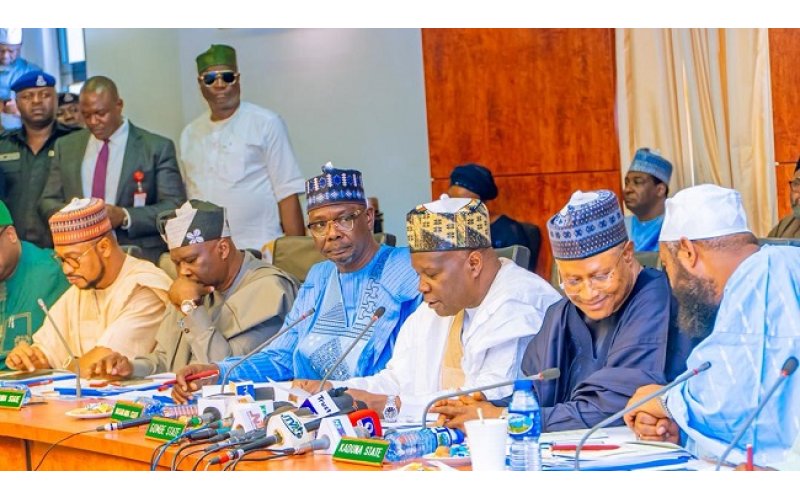
Meeting in Kaduna on Monday, the leaders stressed that
Nigeria’s highly centralised policing structure can no longer adequately serve
a population of over 200 million people spread across vast, poorly governed
territories. They cautioned against divisive rhetoric that could fracture
national unity and undermine collective efforts to combat insecurity.
Governors Push for Decentralised Policing
The meeting, hosted by Kaduna State Governor Uba Sani
and chaired by Gombe State Governor Inuwa Yahaya, comes amid worsening
insecurity in the north, marked by banditry, kidnapping, farmer–herder clashes,
and disruptions to economic activities.
In his welcome remarks, Governor Uba Sani underscored
the urgent need for a unified regional response. He strongly advocated for the
establishment of state police, noting that the country’s current centralised
security model is overstretched and insufficient.
“With fewer than four hundred thousand police officers
nationwide, many rural communities are left without meaningful protection,” he
said. “Nigeria’s centralised policing model can no longer meet the demands of
present realities.”
Sani dismissed claims that northern governors have
become complacent, insisting that all governors are actively collaborating,
sharing intelligence, reviewing strategies and holding one another accountable.
Security Challenges Affect All Sides, Says
Forum Chair
Forum Chairman and Gombe State Governor, Inuwa Yahaya,
described the region’s security challenges as multifaceted, affecting both
Muslims and Christians. He commended President Bola Tinubu for taking bold
steps to secure the nation, especially under growing international pressure.
He urged leaders to reject divisive narratives
designed to erode national unity.
“Our people, Muslims and Christians alike, continue to
suffer from acts of terror and criminality,” Yahaya said. “The objective of our
enemies is to sow discord and distrust. We must not allow them to win.”
Yahaya linked the insecurity to deep-rooted issues
including underdevelopment, illiteracy, climate change pressures, environmental
degradation, and poor resource management, warning that these factors continue
to fuel conflict and economic hardship across the north.
Call for United Action and Human Capital
Investment
Governor Yahaya emphasized that northern leaders must
work together to reverse the region’s decline by investing heavily in human
capital, infrastructure, and socioeconomic opportunities. He highlighted the
crisis of out-of-school children—especially almajiri children—as a major
priority requiring decisive action.
“The reality of millions of our northern children
roaming the streets instead of being in classrooms is a stain on our collective
conscience,” he said.
Yahaya reiterated the forum’s strong support for state
policing and urged federal and state lawmakers to give the reform urgent
priority, expressing optimism after President Tinubu urged the National
Assembly to create the necessary constitutional framework.
Traditional Rulers Call for Openness to
Criticism
Traditional rulers, led by the Sultan of Sokoto, Sa’ad
Abubakar, raised concerns about the social and economic toll of insecurity. The
Sultan urged governors to listen to critics rather than dismiss them, noting
that constructive feedback strengthens governance and improves policy
responses.
He also called for more frequent and structured
engagements between governors and traditional rulers to ensure harmonious
decision-making and coordinated actions across the northern region.
Meeting Attendance
Governors from Kaduna, Gombe, Niger, Zamfara,
Nasarawa, and Bauchi States were present, alongside deputy governors
representing their principals. Several leading traditional rulers, including
the Sultan of Sokoto, also attended the meeting.
Comments:
Leave a Reply