

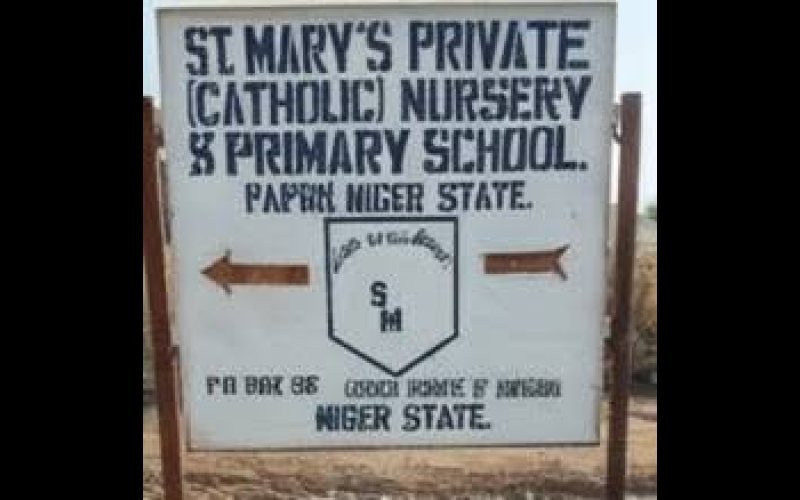
Parents of the more than 265 children abducted last
week from St. Mary’s Catholic School in Niger State are crying out in
desperation, praying for the safe return of their sons and daughters—some of
whom are so young they cannot yet speak.
Armed gangs stormed the Catholic school in Papiri,
Agwarra Local Government Area, seizing over 300 children and staff in one of
Nigeria’s largest school kidnappings in recent years. The attack marked a
resurgence of mass abductions that have haunted Africa’s most populous nation
for more than a decade.
At least 50 students managed to escape during the
chaos, but more than 265 children and teachers remain in captivity. The same
week, 25 schoolgirls were abducted from another school in Kebbi State, and 38
worshippers were seized from a church in Kwara State.
“My son doesn’t even know how to talk”
For many parents, the anguish is unbearable.
“My son is a small boy. He doesn’t even know how to talk,” said Michael
Ibrahim, whose four-year-old son—who also suffers from asthma—was among those
taken.
“We don’t know the condition in which the boy is,” he
added, explaining that the shock of the abduction left his wife hospitalized.
Several of those taken are nursery-aged children.
Another father, Sunday Isaiku, could barely keep his
composure.
“I need my child back. I need my child back. If I had the power to bring my
child back, I would do it,” he said.
A nation long plagued by mass kidnappings
Mass kidnappings have become tragically common in
remote Nigerian communities, where criminal gangs—often labeled as
“bandits”—operate with minimal resistance. These groups target schools and
rural settlements, seeking ransom payments from families or authorities.
Many captives are freed after weeks or months, some
through negotiation, others through rescue operations, and some manage to
escape on their own.
Nigeria’s first globally recognized mass abduction was
the 2014 kidnapping of 276 Chibok schoolgirls by Boko Haram. More than 90 of
those girls remain missing eleven years later.
The country of 230 million continues to face
overlapping security crises, including jihadist insurgencies, banditry, and
communal conflicts. Both Christians and Muslims have been victims of these
attacks.
Silence from the abductors
Four days after the St. Mary’s abduction, no group has
claimed responsibility, and no ransom demand has been issued.
Reverend Bulus Yohanna of the Kontagora Catholic
Diocese appealed urgently for government intervention:
“At this moment, what we want is to get our 265 students and pupils back. I’m
calling on the federal government and the state government to join forces.
Please help us to see them back and reunite with their parents.”
“The government is our only hope”
Parents remain united in one plea: government action.
“We don’t know any other way to bring these children
back if not through the government,” Ibrahim said. “I appeal to the government
to do all within its powers to see their children are back.”
Witness accounts paint a terrifying picture.
Health worker Cidi Mohamed, 27, recalled hearing gunshots as the attackers
stormed the school.
“They put the children at the front and the back of motorcycles,” he said,
describing how the kidnappers transported their captives.
Data shows persistent danger
The Armed Conflict Location & Event Data Project
(ACLED) recorded 42 incidents of violence targeting students in Nigeria in
2025, down from 71 in 2024. Nearly 40% of these abductions involved
ransom demands.
According to ACLED, fragmented bandit groups and other
non-state armed actors are the primary perpetrators, while jihadist groups are
less commonly responsible for attacks on students.
Comments:
Leave a Reply