

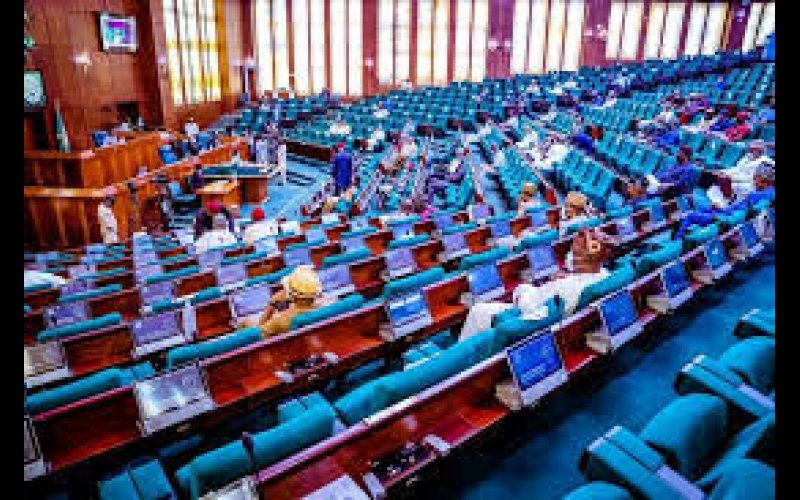
A Bill to establish the National Local Government
Electoral Commission (NLGEC) passed its second reading in the House of
Representatives on Tuesday.
The bill seeks to create an independent body
responsible for organising, conducting, and supervising local government
elections nationwide.
It was sponsored by Deputy Speaker Rep.
Benjamin Kalu and eight others.
Presenting the bill, House Leader, Rep.
Julius Ihonvbere (APC-Edo), said the commission would
enhance the credibility, transparency, and fairness of local government
elections, strengthening democracy at the grassroots level.
He stated that the commission would consist of a
Chairman and 37 members, representing the 36 states of the federation and the
Federal Capital Territory (FCT).
He added that the Chairman, who would serve as the
Chief Electoral Officer, and other board members would be appointed by the
President.
He explained that appointments would be based on the
recommendation of the National Council of States and subject to Senate
confirmation.
The commission would be required to submit periodic
reports on its activities and election outcomes to the President, the National
Assembly, and the public, ensuring accountability.
“The commission shall organize, conduct, and supervise
elections for Chairmen and Councilors of all Local Governments, including the
Area Councils of the FCT.
“It shall set election timetables, manage polling
processes, and enforce compliance with electoral laws,” he said.
He said the commission would oversee voter
registration, maintain an accurate voter register, and ensure eligible citizens
could participate in elections.
“It shall regulate and monitor political parties,
candidates, and stakeholders to ensure compliance with campaign finance laws,
electoral codes, and relevant regulations,” he said.
According to him, the commission will also implement
voter education programmes to inform citizens about elections, their rights,
and responsibilities, encouraging participation and reducing voter apathy.
In a related development, a bill specifying the
timeframe within which the Executive must present international treaties to the
National Assembly also passed its second reading.
The bill, also sponsored by the Deputy Speaker,
mandates that any treaty between Nigeria and another country be presented for
enactment within 180 days.
Both bills were referred to the Committee on the
Review of the Constitution for further legislative action.
Comments:
Leave a Reply