

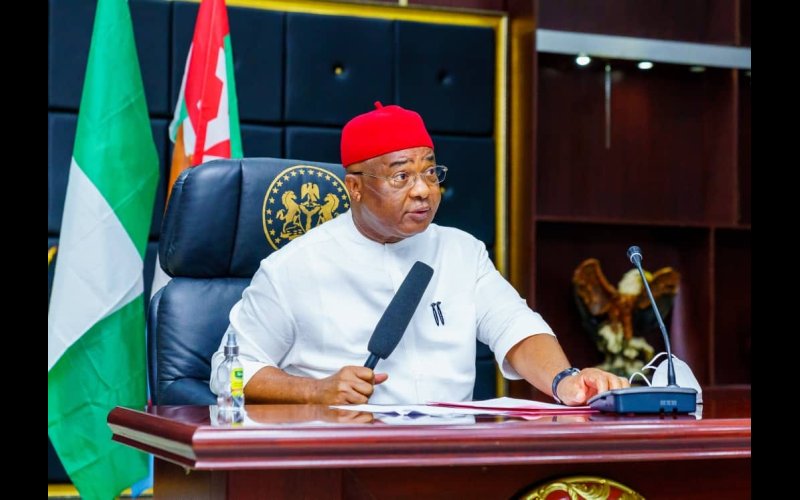
Governor Hope Uzodimma of Imo State has renewed
calls for the constitutional recognition of Nigeria’s traditional rulers,
describing their demand as “not a privilege but a necessity for clarity and
national stability.”
Speaking at the meeting of the National Council of
Traditional Rulers of Nigeria (NCTRN) held on Monday, October 13, 2025, at Hotel
Continental, Victoria Island, Lagos, the governor lamented that the 1979
Constitution stripped traditional rulers of their formal roles, a situation
he described as “a gap that must be urgently corrected.”
“The time has come to make it right—not by creating a
new role, but by giving legal status to what already exists,” Uzodimma said.
‘Traditional Rulers Are Already Governing’
Uzodimma noted that traditional rulers across the
country already perform critical functions that support peace, governance, and
community development.
He highlighted their roles in conflict resolution, land and family dispute
mediation, cultural preservation, and civic mobilisation, adding that their
contributions sustain grassroots governance even without constitutional
protection.
“They draw their authority from history, not
appointment; from community trust, not political tenure,” he said.
Historical Context
The governor traced the historical place of
traditional rulers in Nigeria’s governance, recalling that the 1963
Republican Constitution granted them formal legislative roles across all
regions — North, West, East, and Mid-West.
He noted that the 1979 Constitution removed these provisions, relegating
traditional rulers to advisory positions “defined by government discretion
rather than law.”
Uzodimma described this as a “failure of institutional
memory” and called for a restoration of their constitutional relevance.
Learning from Other African Nations
Citing examples from Ghana, South Africa, and
Namibia, Uzodimma argued that multi-ethnic democracies across Africa have
successfully integrated traditional institutions into modern governance
frameworks.
He noted that these nations constitutionally recognise and define the roles of
chiefs and traditional leaders without undermining their democratic structures.
“If Ghana, South Africa, and Namibia can give
constitutional expression to their traditional institutions, why not Nigeria?”
he asked.
On Neutrality and Integrity
Uzodimma also urged royal fathers to maintain neutrality
in partisan politics, stressing that their strength lies in their moral
authority and trust among the people.
“You do not serve a party; you serve people. That
neutrality is not weakness—it is strength,” he said.
“A word from the palace, spoken in truth and without bias, can shape the
direction of a state.”
Call to Action
The Imo State Governor pledged his full support for
any legislative or policy effort aimed at restoring constitutional recognition
to traditional rulers.
“Your call is not for privilege but for protection of
a role that has survived war, colonisation, military rule, and political
instability,” he said.
“If this matter comes before the National Assembly, I will stand with you
without hesitation.”
Uzodimma concluded by commending the traditional
rulers for their continued role in maintaining national unity, cultural
identity, and community peace.
“Your presence here today is proof that the
institution you represent is alive, strong, and ready to lead where it must,”
he said.
Comments:
Leave a Reply