

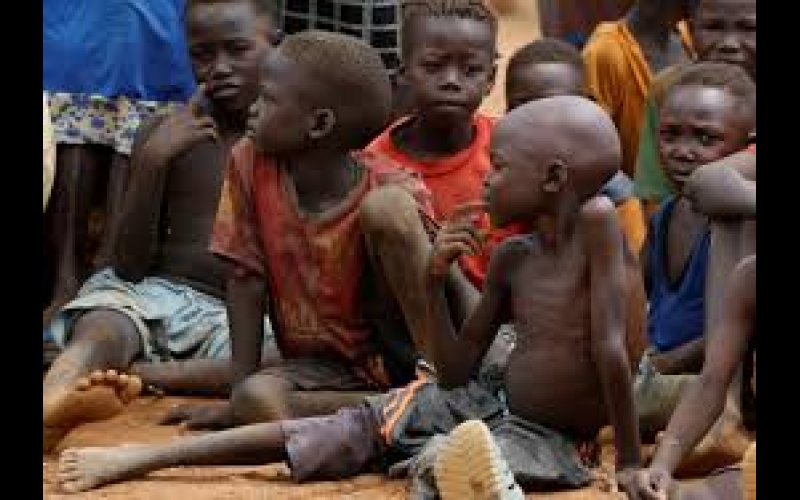
The World Food Programme (WFP) has warned that
escalating jihadist attacks and worsening insecurity across northern Nigeria
are pushing hunger to levels not seen in years, with thousands now at risk of
“famine-like conditions.”
In a statement released on Tuesday, the UN agency said
nearly 35 million people are projected to face severe food insecurity
during the 2026 lean season, which runs from May to September each year.
Borno: 15,000 at Risk of Catastrophic
Hunger
According to WFP, Borno State, the epicentre of
the 16-year Boko Haram insurgency, remains the worst hit.
About 15,000 people in the state are expected to slide into “catastrophic
hunger” — the highest category on the global food insecurity scale.
The conflict in the northeast has killed over
40,000 people, displaced around two million, and continues to spill
into Niger, Cameroon, and Chad.
Multiple Security Crises Amplifying Hunger
Beyond the Islamist insurgency, Nigeria faces
relentless violence from armed groups known locally as bandits, who raid
villages, kill residents and kidnap for ransom across the northwest and
north-central regions.
Just last week, the country witnessed three major
mass kidnappings:
Although insurgent attacks dropped after 2015, WFP
says violence has surged again in 2025, fuelled by multiple factors
including factional jihadist activity and overstretched security forces.
Economic Crisis Deepens Food Shortages
The lean season — the period between planting and
harvest — is already the most difficult time for rural families. Normally,
households survive by buying food in local markets, but soaring prices driven
by Nigeria’s economic crisis have made this nearly impossible.
Inflation remains in the double digits despite ongoing
reforms by President Bola Tinubu, which, while praised by the IMF, have
sharply increased the cost of living for ordinary Nigerians.
Aid Cuts Forcing WFP to Scale Down Support
WFP warned that its operations are being crippled by global
funding cuts.
The agency’s largest donor, the United States,
has reduced foreign aid under President Donald Trump, and several European
governments have also slashed their humanitarian budgets.
Nearly one million people in northeast Nigeria
rely on WFP food assistance, but funding shortages forced the agency to begin reducing
nutrition programmes in July.
Out of 500 nutrition centres run by the WFP in
the region:
Jihadist Activity Expands
Adding to concerns, the Al-Qaeda-linked Group for
the Support of Islam and Muslims (JNIM) claimed responsibility for its first
attack in Nigeria late last month, signalling a spread of extremist
operations beyond the traditional Boko Haram–ISWAP axis.
‘Families Are Being Pushed to the Edge’ —
WFP
WFP’s representative in Nigeria, David Stevenson,
warned that worsening violence and deepening poverty are pushing communities
toward disaster.
“Families are being pushed closer to the edge, and the
need for support is rising,”
he said.
With attacks intensifying and aid pipelines shrinking,
humanitarian experts warn that northern Nigeria could face one of its worst
food crises in decades.
Comments:
Leave a Reply