

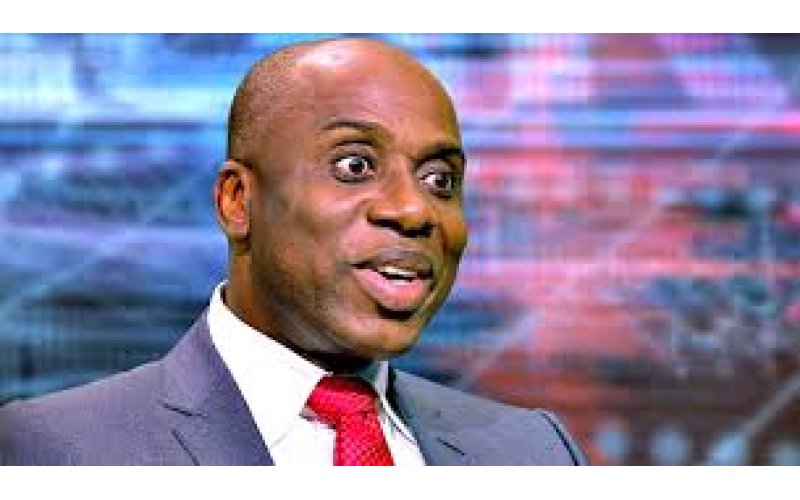
Former Governor of Rivers State, Rotimi Amaechi has
stated that he would have handled the removal of the fuel subsidy differently
if he had been elected president.
Amaechi acknowledged the removal of fuel subsidy was
unavoidable for any president, but questioned the timing and preparedness of
Tinubu’s government.
Speaking during a two-day event, themed “Strengthening
Nigeria’s Democracy: Pathway to Good Governance and Political Integrity,”
Amaechi emphasized the need for social housing and job creation as cushioning
measures.
He stated that when his wife and children asked him
whet he would have done differently about removing fuel subsidy, he told them
that he would not remove it without social housing.
He said, “ There is nobody that would have become
president that would not have removed the subsidy. What I don’t know is what
time was appropriate for the removal. How prepared was the Tinubu government
when he announced the removal?
“My wife and children asked me what I would have done
differently. My response was this: I would remove the subsidy, but I would not
remove it without social housing. Why? With the money saved from subsidy
removal and Naira devaluation, it could be used to build between 200,000 and
300,000 houses.”
Amaechi explained that such a policy would not only
address the housing deficit but also create jobs across various sectors.
“ If you build between 200,000 and 300,000 houses
in the states, how many jobs have you created? At least 300,000 bricklayers,
300,000 carpenters, and 300,000 plumbers. By the time you do those things, what
have you done? You have put money in the hands of the people,” he stated.
Amaechi also lamented the growing gap between the rich
and poor in Nigeria, describing the absence of a functional middle class as a
critical challenge.
“ The last time we had the middle class was under
President Olusegun Obasanjo. He created an economy that generated jobs. Even
though some argued it was a shaky middle class that disappeared at the end of
every month when salaries were paid, at least we had a middle class,” he
said.
He continued: “ Now, it’s either you are rich or
you are poor. If social housing and investments in agriculture had been
implemented alongside subsidy removal, people would not feel the impact as
harshly as they do now.”
Amaechi stressed that the government’s use of funds
saved from subsidy removal should focus on tangible projects that directly
improve citizens’ lives and provide economic opportunities.
Comments:
Leave a Reply