

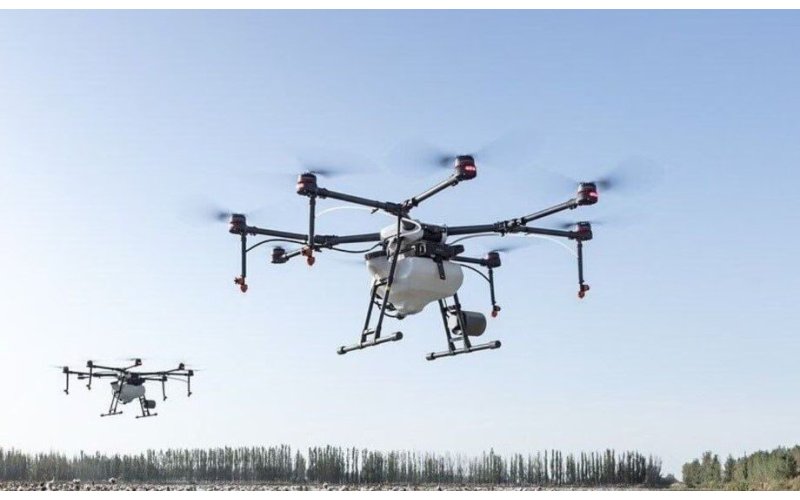
The Nigerian Army has raised significant concerns over
the increasing use of armed drones by terrorist groups, notably Boko Haram and
the Islamic State West Africa Province (ISWAP), in the northeastern region of
the country. This development marks a troubling escalation in the tactics
employed by these insurgent groups.
Emergence of Armed Drones in Terrorist
Operations
Major General Abdulsalam Abubakar, the Theatre
Commander of Operation Hadin Kai, disclosed that since November 2024, there has
been a noticeable deployment of armed drones by terrorist factions in the
northeast. These drones, akin to those utilized in conflict zones like Ukraine
and Israel, are challenging to detect with conventional radar systems, posing a
significant threat to military operations and civilian safety.
A notable incident involved a nighttime assault on a
Nigerian military base in Borno State, where ISWAP deployed four drones
equipped with grenades. The attack resulted in the deaths of five soldiers
before air support could neutralize the threat.
Regional Instability and Arms
Proliferation
The proliferation of armed drones is partly attributed
to the broader instability in the Sahel region. The collapse of security
structures in neighboring countries has facilitated the smuggling of
sophisticated weaponry, including drones, into Nigeria. These weapons often
enter through porous borders, exacerbating the security challenges in the
northeastern states of Adamawa, Bauchi, Borno, Gombe, Taraba, and Yobe.
Military Response and Community Engagement
Despite these challenges, the Nigerian military has
reported significant successes in counter-insurgency operations. Over 20,000
internally displaced persons have returned to their ancestral homes, and more
than 20 terrorists have been neutralized in recent operations. The military
emphasizes the importance of community collaboration and support from
governmental agencies to effectively combat the evolving threat posed by armed
drones.
The introduction of armed drones by terrorist groups
signifies a new phase in the insurgency, necessitating adaptive strategies and
increased vigilance from both the military and civilian populations.
Comments:
Leave a Reply