

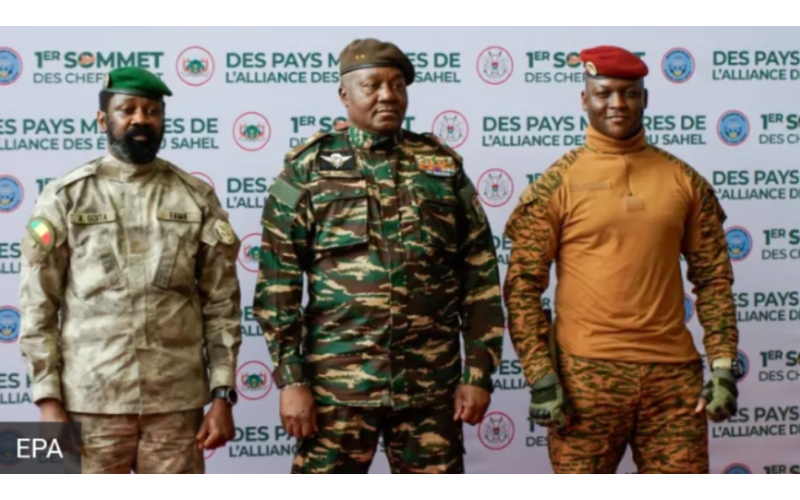
In a joint declaration, the military-led
governments of Burkina Faso, Mali, and Niger have announced they will no
longer recognize the authority of the International Criminal Court (ICC),
accusing the tribunal of bias and ineffectiveness.
The statement, released over the weekend, argued that
the ICC has “failed to prosecute proven war crimes, crimes against humanity,
genocide, and crimes of aggression,” while disproportionately targeting weaker
nations, especially in Africa.
Rising Rift With Western Institutions
The decision marks another step in the three nations’
ongoing estrangement from Western-backed bodies. Together, the juntas formed
the Confederation of Sahel States after staging coups between 2020 and
2023. Earlier this year, the bloc also withdrew from the Economic Community
of West African States (ECOWAS), rejecting calls to restore civilian rule.
The announcement further underscores their deepening
ties with Russia, which has positioned itself as a strategic partner in
security and governance. The move comes just two years after the ICC issued an
arrest warrant for Russian President Vladimir Putin over alleged war
crimes in Ukraine, a decision condemned by Moscow and its allies.
Legal and Political Implications
According to international law, a state’s withdrawal
from the ICC becomes effective one year after formally notifying the United
Nations. The court, headquartered in The Hague, has yet to issue a
response.
Since its inception in 2002, the ICC has opened 33
cases, with all but one involving African nations. Leaders such as Rwandan
President Paul Kagame have long accused the court of maintaining an
anti-African bias.
Meanwhile, human rights groups continue to accuse Sahelian
armed forces of abuses during ongoing counterinsurgency campaigns against al-Qaeda
and Islamic State-linked groups, raising concerns about the absence of
external accountability.
Toward Local Justice Mechanisms
The Sahel states say they intend to establish “indigenous
mechanisms for peace and justice,” signaling a decisive turn away from
international oversight in favor of homegrown solutions.
Analysts warn, however, that the withdrawal could
complicate efforts to investigate atrocities in a region already plagued by
instability, jihadist insurgencies, and fragile governance.
Comments:
Leave a Reply