

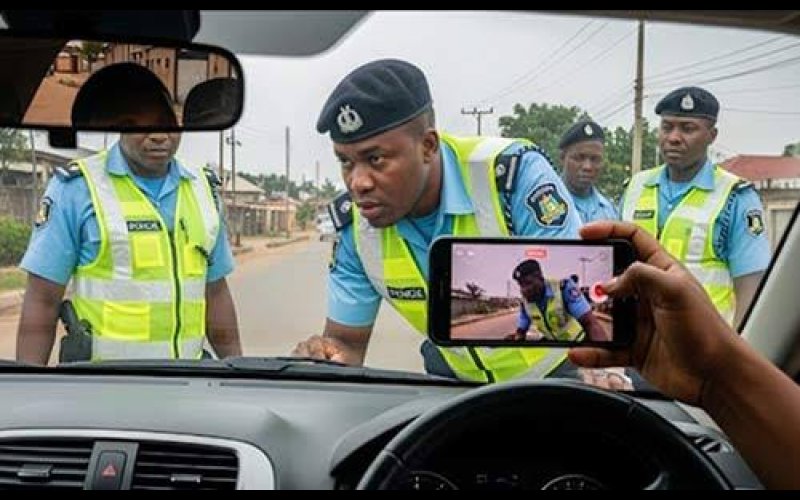
A Federal High Court sitting in Warri, Delta State,
has ruled that Nigerians have the legal right to record police officers during
stop-and-search operations carried out in public places.
The judgment was delivered on Tuesday, March 17, by
Justice Hyeladzira Nganjiwa in a fundamental rights enforcement suit filed by
lawyer Maxwell Nosakhare Uwaifo.
Uwaifo approached the court seeking clarity on whether
police officers can lawfully conduct stop-and-search operations without
displaying proper identification, such as name tags and force numbers, and
whether citizens have the right to record such interactions.
The suit named the Inspector-General of Police, the
Nigeria Police Force, the Police Service Commission, and the Attorney-General
of the Federation as defendants.
According to the lawyer, the case stemmed from a
personal encounter with police officers at Sapele Roundabout on May 10, 2025,
while traveling from Benin to Warri. He alleged that officers stopped him and
questioned him aggressively. When he attempted to record the interaction with
his phone, he said the officers threatened him with arrest and ordered him to
stop recording.
Uwaifo further stated that the officers were not
wearing name tags, did not identify themselves, and were operating in an
unmarked black Toyota Sienna without a license plate or any police markings. He
described the encounter as intimidating and said he felt compelled to comply
out of fear of being assaulted, detained, or having his phone seized.
He told the court that such incidents are not
isolated, noting that many Nigerians have experienced harassment or
intimidation from police officers for attempting to document their actions in
public.
In his suit, Uwaifo argued that under Section 39 of
the 1999 Constitution, Nigerians are entitled to freedom of expression, which
includes the right to record law enforcement officers performing public duties.
He also asked the court to declare it unlawful for police officers to harass,
arrest, or confiscate devices from individuals recording them.
Additionally, he sought orders compelling police
authorities to ensure officers wear proper identification during operations,
provide clear guidelines affirming citizens’ rights to record police
activities, and discipline officers who violate these rights. He also requested
?80 million in damages for alleged rights violations.
Although the police were not represented in court, the
Attorney-General of the Federation was represented by Babatunde Ajajogun and
D.O. Tarfa.
In his ruling, Justice Nganjiwa affirmed that
Nigerians have a constitutional right to record police officers while they
perform their duties in public. He further held that officers must wear visible
name tags and display their force numbers or other proper identification during
such operations.
The court also declared it unlawful for police
officers to harass, intimidate, arrest, or seize devices from citizens for
recording them.
While the court did not grant the full amount of
damages requested, it awarded ?5 million for the violation of the applicant’s
fundamental rights and an additional ?2 million to cover the cost of
litigation.
Comments:
Leave a Reply