

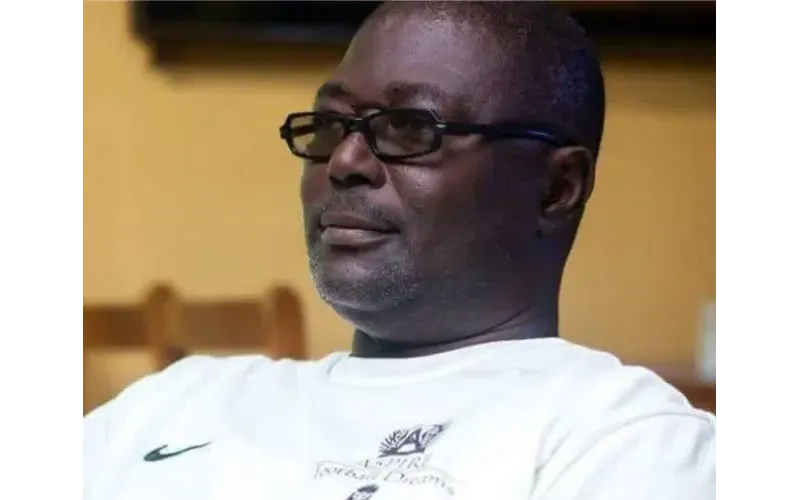
For Godwin Dudu Orumen, the choice was clear from the
start. Even as a boy in primary school in Delta State, he was captivated by the
exploits of athletes and footballers. Sport, for him, was not just
entertainment — it was destiny.
“Dudu,” as he is fondly called, was made for the field
— but also for the mind. While many would have stopped at passion, he pursued
purpose. His Bachelor’s degree in English and Literature gave him language; his
Law degree gave him authority. Between the two, he built a rare bridge between sport
and scholarship — a blend of intellect and instinct that has defined his voice
for over three decades.
When you meet Dudu, you encounter not just a sports
administrator, but a thinker — one who understands the game, its governance,
and its soul.
A Voice Between the Field and the Law
From the terraces of the National Stadium to the
corridors of policy and power, Dudu’s voice has echoed for over 30 years —
steady, insightful, and unflinching.
Trained in law, driven by sport, and refined by experience,
his career has straddled multiple worlds — from advocacy to administration,
journalism to mentorship. His academic grounding — LLB, BL, and BA in English
and Literature — gave him precision; his heart gave him purpose.
As Partner at Dalley & Kempes Attorneys and MD/CEO
of Multisports Services & Entertainment, he merged intellect with
enterprise, creating frameworks where sport could thrive with integrity and
commercial value.
As Chairman of the Edo State Sports Commission,
despite facing political interference, Dudu redefined the vocabulary of sports
governance — one of order, accountability, and vision.
From Field to Policy: A Trail of Influence
Few Nigerians have worn as many hats in sports
administration as Dudu Orumen. His résumé reads like a living chronicle of the
nation’s athletic journey:
He has also served on several national committees —
including the NFA Technical Committee, AFCON 2000 Marketing Committee, Presidential
Committee on School Sports Revival, and the Main Organising Committees of the National
Sports Festivals (Eko 2012, Lagos 2013, and Calabar 2014).
Each role added another thread to a tapestry woven
from intellect, influence, and integrity.
The Book: Sports, Politics and Power
On November 19, 2025, at 10:30 a.m., the Nigerian
Institute of International Affairs (NIIA) will host the unveiling of Dudu’s
seminal work, Sports, Politics and Power — a chronicle of Nigeria’s
sporting soul and its intricate dance with politics, ambition, and identity.
Part memoir, part manifesto, the book distills decades
of experience into one urgent thesis:
Sports in Nigeria is not mere recreation — it is
politics, culture, and identity in motion.
Through candid reflections and sharp analysis, Dudu
explores how decisions made in the shadows of influence have shaped the
destinies of athletes, administrators, and the nation itself.
It is a rare document — written by someone who has
seen sports from every seat in the arena: advocate, critic, participant, and
reformer.
The Voice That Roared
“Some voices echo,” a colleague once said. “Others
resound. But Dudu’s roared.”
That roar has been heard in stadiums, committee rooms,
and television studios — in policy debates, mentorship sessions, and public
advocacy. It is the roar of conviction, of a man who believes that sports can
be Nigeria’s finest diplomacy, its truest education, and its most unifying
language.
To Dudu, sports is not just about winning medals — it
is about healing divisions, inspiring discipline, and building nations.
A Legacy in Motion
When Sports, Politics and Power is unveiled, it
will mark more than the launch of a book. It will be the celebration of a life
— one that proves that sports is not merely a pastime, but a platform; not just
a contest of strength, but a test of nationhood.
For Godwin Dudu Orumen, the game was never just about
goals.
It was about governance.
It was about growth.
It was about greatness.
And now — it is about legacy.
Comments:
Leave a Reply