

Today, that dream is alive on the world stage — in the
feet of Youssef En-Nesyri, Nayef Aguerd, and Azzedine Ounahi;
in the gleaming turfs of Rabat, Tangier, and Casablanca;
and in the proud roar of millions of fans who once again believe that African
football can conquer the world.
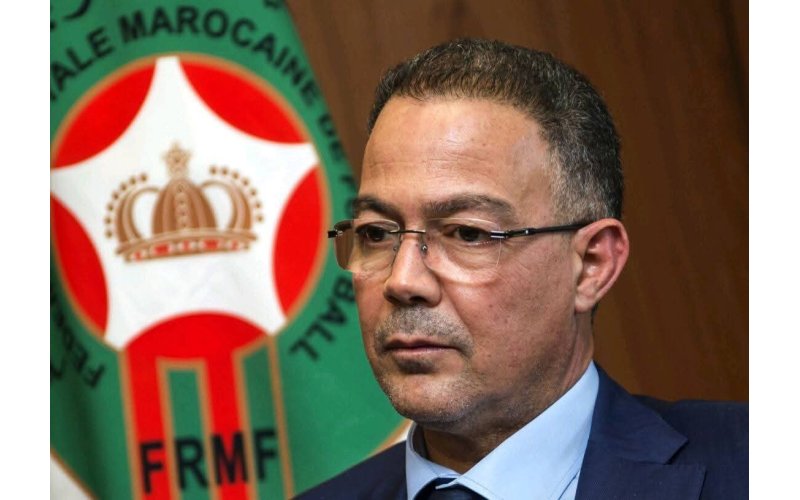
For Fouzi Lekjaa, President of the Royal
Moroccan Football Federation (FRMF), none of this is coincidence. In an
interview with Le Figaro published on October 22, Lekjaa traced
Morocco’s football renaissance to the far-reaching vision of King Mohammed
VI — a vision rooted in structure, investment, and belief.
“Everything we have achieved is the result and
culmination of the royal sports vision implemented more than fifteen years
ago,” Lekjaa said, his tone reflecting both gratitude and determination.
The Birth of a Vision
The journey began in 2008, when Morocco
convened a National Sports Conference that laid out a bold roadmap for
the country’s sporting future. Out of that moment emerged not just policies,
but purpose — a recognition that success would come through patience,
planning, and the nurturing of local talent.
A year later, that vision took form with the creation
of the Mohammed VI Football Academy in Salé.
Today, the academy stands as one of the world’s
premier football training centers — a sprawling complex where elite performance
meets education, and where young Africans are molded not just as athletes, but
as professionals and citizens.
Lekjaa proudly describes it as “one of the best
centers, if not the best, in world football.”
He’s not exaggerating. The academy’s graduates — many
now household names in Europe — were central to Morocco’s historic run at the 2022
FIFA World Cup in Qatar, where the Atlas Lions became the first
African and Arab team ever to reach the semifinals.
A Culture of Belief
Yet for Lekjaa, Morocco’s true transformation goes
deeper than infrastructure or investment.
“The common thread across all national teams is the
fighting spirit,” he said. “Today, the mindset of all our male and female
players is to win titles and compete with football’s traditional giants.”
It is this shift in mentality — from
participants to contenders — that has redefined Moroccan football. The U-20
team’s World Cup triumph in Chile stands as proof of a generation
unafraid of global competition.
Lekjaa’s conviction is unshaken:
“I believe we will soon witness a Moroccan, African,
or Arab team crowned world champions at the senior level. For us, nothing is
stopping us from chasing these titles.”
The Road Ahead
As Morocco prepares to host the 2025 Africa Cup of
Nations and co-host the 2030 FIFA World Cup with Spain and Portugal,
Lekjaa’s message of unity rings louder than ever.
He emphasizes that the Moroccan national team belongs
to every Moroccan — those born in Casablanca and those raised in Paris,
those developed in local clubs and those shaped in European academies.
That inclusive spirit mirrors the nation’s broader
ambition — a belief that Morocco’s rise is Africa’s rise, and that the
continent’s football story is still being written.
For a country that once watched others dominate the
global stage, Morocco’s resurgence is both poetic and purposeful — a testament
to what happens when vision meets execution, and when leadership becomes
legacy.
And as the world’s eyes turn toward Rabat, Tangier,
and Casablanca in the years to come, Fouzi Lekjaa’s words echo like prophecy —
a reminder that what Morocco has built is not merely a football program, but a
movement born of faith, discipline, and royal foresight.
Comments:
Leave a Reply