

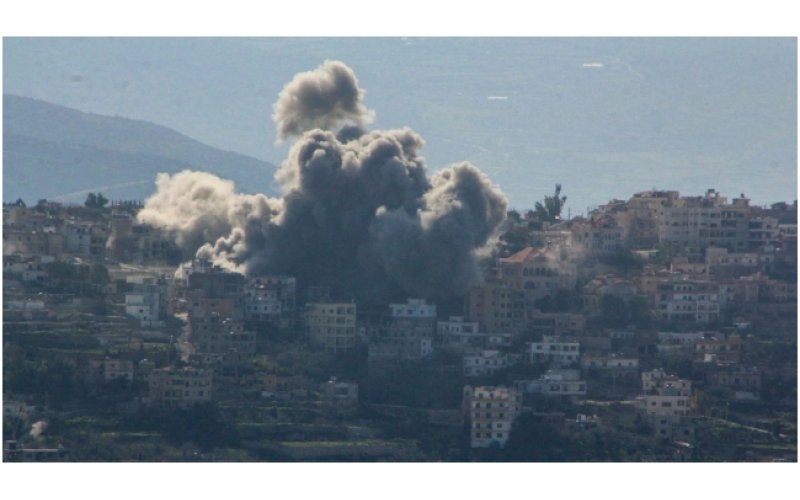
The conflict between Israel and Iran
intensified over the weekend as Israeli forces carried out some of their
largest air raids since the start of the aerial bombardment campaign.
Israeli strikes targeted key military sites in Iran,
including a military academy, an underground command centre, and a missile
storage facility. Pre-dawn images showed thick smoke rising from Mehrabad
International Airport in Tehran, one of the capital’s main airports.
Meanwhile, Donald Trump issued a warning on his
social media platform, Truth Social, saying Iran would face severe
consequences. He suggested that additional targets previously spared could now
face destruction because of what he described as Iran’s “bad behavior.”
Iran’s President Masoud Pezeshkian responded
defiantly in a televised speech, rejecting Trump’s call for “unconditional
surrender.” According to him, Iran’s enemies would have to “take their wish for
the unconditional surrender of the Iranian people to their graves.”
Iran Retaliates Across the Region
Despite days of intense strikes on its military
infrastructure, Iran demonstrated it still has the ability to retaliate.
Missile and drone attacks triggered air raid alerts in Jerusalem and
across several Gulf cities including Dubai, Manama, and areas
near Riyadh.
Saudi Arabia
reported intercepting a ballistic missile aimed at an air base housing U.S.
military personnel, while the United Arab Emirates said it intercepted
15 ballistic missiles and 119 drones.
However, footage verified by AFP showed one projectile
striking near Dubai International Airport, causing an explosion close to
airport buildings and parked aircraft.
Jordan also accused Iran
of targeting critical installations with missiles and drones over the past
week.
Pezeshkian later apologised to neighbouring Gulf
countries that host major United States Armed Forces bases, saying Iran
would only target them if their territories were used to launch attacks against
Iran.
Iran’s Islamic Revolutionary Guard Corps also
said it fired on an oil tanker, the Prima, in the Strait of Hormuz,
a vital global shipping route that Iran has effectively closed amid the
escalating conflict.
War Expands Across the Region
The war, now entering its second week, began after
joint Israeli and U.S. airstrikes killed Iran’s supreme leader Ali Khamenei.
Since then, the conflict has spread across the region,
affecting Lebanon, Cyprus, Turkey, and Azerbaijan,
while clashes have even extended to waters near Sri Lanka, where U.S.
forces reportedly sank an Iranian warship.
Inside Iran, damage to infrastructure and residential
areas is mounting, with residents reporting widespread fear as security forces
patrol the streets of Tehran.
According to Iran’s health ministry, at least 926
civilians have been killed and around 6,000 injured, although these figures
could not be independently verified.
Israel has also intensified attacks in Lebanon,
repeatedly striking Beirut’s southern suburbs, an area considered a
stronghold of the Iran-backed militant group Hezbollah.
Israel’s Defence Minister Israel Katz warned Joseph
Aoun, the President of Lebanon, that the country would face a “very heavy
price” if Hezbollah was not disarmed.
Lebanon’s health ministry says at least 217 people
have been killed in Israeli airstrikes over the past week, prompting Prime
Minister Nawaf Salam to warn that a humanitarian disaster could be
imminent.
Global Impact and Calls for Ceasefire
The conflict is also causing global economic
disruption, with stock markets falling and oil prices surging amid fears of
prolonged instability.
Vladimir Putin,
the President of Russia, called for an immediate ceasefire during a
phone conversation with Pezeshkian, according to the Kremlin.
However, Washington appears unfazed by reports that
Russia may be sharing intelligence with Iran. U.S. Defense Secretary Pete
Hegseth said the United States was “not concerned” about the allegations.
The war has already claimed the lives of six American
service members, with Trump expected to attend a ceremony at Dover Air Force
Base in Delaware as their bodies are returned to the United States.
With both sides maintaining a defiant stance, analysts
warn the conflict could continue for weeks with no clear path to peace.
Comments:
Leave a Reply