

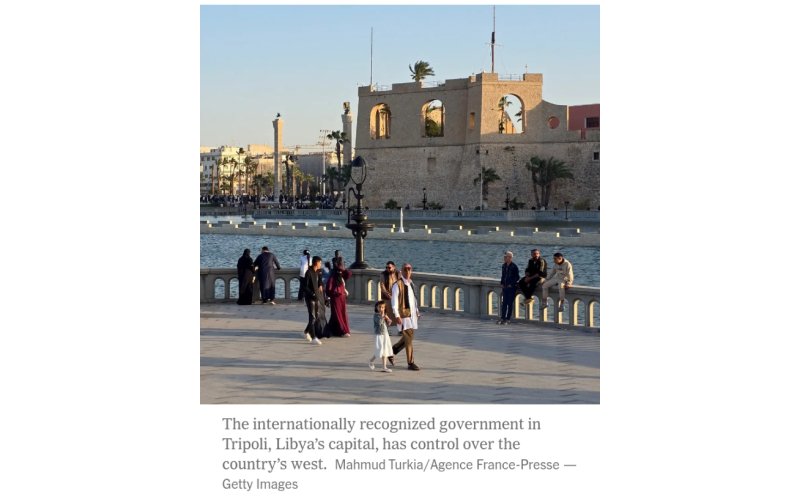
Libya’s two rival governments have
strongly denied any agreement with the United States to receive deported
migrants, pushing back against reports that the Trump administration planned to
transfer individuals to the North African country on a U.S. military aircraft.
On Tuesday, U.S. officials revealed that a deportation
flight to Libya could depart as early as Wednesday, raising alarm in a country
that remains deeply divided between two competing administrations: the
internationally recognized government based in Tripoli and the eastern
authority aligned with military commander Khalifa Hifter.
In a statement, the Tripoli-based Government of
National Unity rejected “any agreement or coordination” with Washington over
the entry of deported migrants. The government emphasized that it would not
allow Libyan territory to be used as a destination for deportees “without its
knowledge or consent,” warning that any such move would violate Libya’s
sovereignty.
The Tripoli government also hinted that unauthorized
elements may have engaged in backdoor dealings, referring to “parallel
entities” — a likely nod to officials in eastern Libya — but insisted that such
arrangements “do not represent the Libyan state and are not legally or
politically binding.”
Authorities in eastern Libya echoed the denial. The
foreign ministry under Hifter’s administration released a statement Wednesday
saying it “firmly rejects the existence of any agreements or understandings
concerning the resettlement of migrants of any nationality, whether African,
European, American or otherwise.”
While the U.S. maintains formal diplomatic ties only
with the Tripoli government, recent visits by Hifter’s son, Saddam — a senior
military official in eastern Libya — to Washington have fueled speculation of
possible unofficial agreements. Former President Donald Trump, now seeking a
return to office, maintained friendly relations with Khalifa Hifter during his
first term and is believed to still regard him as a key regional partner due to
his control over Libya’s critical oil fields.
Human rights organizations have raised serious
concerns over any migrant deportations to Libya, citing widespread abuse in the
country’s migrant detention system. Libya has long served as a major transit
point for migrants attempting to reach Europe, and its detention centers have
been described by Amnesty International as a “hellscape.” A 2021 report by the
group detailed rampant sexual violence against detainees, including minors.
The Global Detention Project has also documented
systemic mistreatment in Libya’s migrant centers, including torture, forced
labor, and conditions amounting to modern-day slavery.
With both Libyan administrations distancing themselves
from the U.S. plan, it remains unclear whether the proposed deportation flight
will proceed — or who, if anyone, authorized it.
Comments:
Leave a Reply