

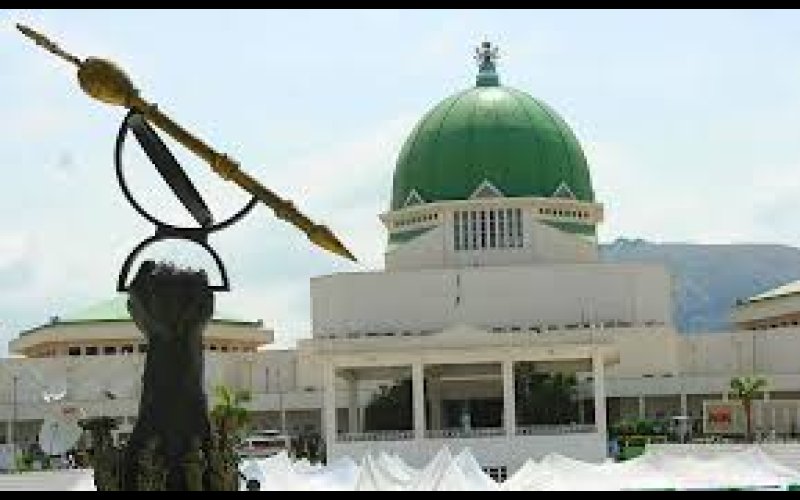
The Nigerian
Senate has officially endorsed President Bola Tinubu’s declaration of a state
of emergency in Rivers State, aligning with an earlier decision by the House of
Representatives. This move marks a significant escalation in the federal
government’s intervention in the state’s ongoing political crisis, which has
been characterized by intense power struggles and concerns over the stability
of Nigeria’s vital oil-producing region. The emergency rule is set to last for
an initial period of six months, during which the federal government will
exercise direct control over the state’s governance. The decision to approve
emergency rule in Rivers State comes after weeks of political tension between
Governor Siminalayi Fubara and the state’s House of Assembly, a conflict that
has threatened to paralyze governance in the state.
At the heart of the crisis is a fierce political
battle within the opposition People's Democratic Party (PDP), which controls
Rivers State. Governor Fubara has been at odds with state lawmakers, leading to
legislative gridlock, court battles, and fears of broader instability. The
National Assembly's approval of emergency rule effectively suspends the current
state administration, including the governor, his deputy, and the members of
the Rivers State House of Assembly. This move, while supported by some federal
lawmakers and political observers who believe it is necessary to restore order,
has sparked widespread controversy and legal challenges.
One of the key concerns raised by both domestic and
international observers is the manner in which the emergency rule has been
imposed. While Nigeria’s 1999 Constitution grants the president the authority
to declare a state of emergency under Section 305, legal experts and opposition
voices argue that it does not provide for the removal of elected officials
through executive proclamation. The Nigerian Bar Association (NBA) has strongly
criticized the decision, calling it a violation of democratic principles and
constitutional law. The NBA insists that the only legal means to remove an
elected governor is through impeachment by the state legislature or a judicial
ruling, neither of which has occurred in this case.
In response to the suspension of the state government,
President Tinubu has appointed retired Vice Admiral Ibok-Ete Ibas as the
military administrator of Rivers State. Ibas, a former Chief of Naval Staff, is
expected to oversee the administration of the state during the emergency
period, ensuring the continued functioning of essential government services
while addressing security concerns. Although the executive and legislative arms
of the state government have been suspended, the judiciary remains operational,
a move that the federal government argues will preserve some level of legal
oversight and due process. However, critics contend that the judiciary alone
cannot provide the checks and balances necessary to prevent potential abuses of
power under emergency rule.
The National Assembly has also formed a joint
committee to monitor the administration of Rivers State during this period.
This committee is tasked with ensuring that the emergency rule is not misused
and that the transition back to normal governance is handled in a fair and transparent
manner. Additionally, a mediation committee comprising prominent Nigerian
leaders and elder statesmen has been established to facilitate dialogue between
the warring political factions in Rivers State. The goal of this committee is
to seek a lasting political resolution that would prevent further federal
intervention once the emergency period expires.
Beyond the political crisis, another major factor
contributing to the federal government’s decision is the rising threat to
Nigeria’s oil infrastructure. Rivers State is a key hub for Nigeria’s oil
production, and recent acts of pipeline vandalism and sabotage have raised
alarms about the potential for economic disruption. The most notable incident
involved an explosion along the Trans Niger Pipeline, which temporarily halted
the transportation of crude oil to the Bonny export terminal. The federal government
has argued that instability in the state could further threaten oil production,
a critical component of Nigeria’s economy. Supporters of the emergency rule
argue that ensuring stability in Rivers State is essential for national
economic security, as any prolonged crisis in the region could disrupt oil
exports and affect government revenue.
Despite these concerns, opposition leaders and civil
society organizations have strongly condemned the declaration of emergency
rule. Former Vice President Atiku Abubakar and Labour Party presidential
candidate Peter Obi have both spoken out against the move, calling on the
National Assembly to reject it.
They argue that the political conflicts in Rivers
State, while serious, do not justify such an extreme measure, especially when
legal and constitutional processes exist to address governance disputes. Atiku
and Obi have warned that allowing emergency rule to stand could set a dangerous
precedent, enabling future administrations to use similar measures to suppress
political opposition.
Public reaction to the emergency rule has been deeply
divided. Some residents of Rivers State, particularly those frustrated by the
political deadlock, have expressed support for the federal government’s
intervention, hoping it will restore stability and allow governance to function
effectively. However, others fear that the move could lead to greater federal
overreach, diminishing the autonomy of state governments and undermining
Nigeria’s federal system. Human rights organizations have also voiced concerns
over the potential for abuses under military-style administration, urging the
government to ensure that civil liberties and fundamental rights are protected.
The international community is closely watching
developments in Rivers State, with foreign governments and diplomatic missions
assessing the situation’s implications for Nigeria’s political stability. The
United Nations and the African Union have both called for dialogue and
adherence to constitutional principles in resolving the crisis. Meanwhile,
business leaders and investors, particularly those in the oil and gas sector,
are monitoring the situation for any signs of further disruption that could affect
economic activities in the region.
As the emergency rule takes effect, many questions
remain about what comes next for Rivers State. Will the mediation efforts lead
to a peaceful resolution of the political crisis? Will Governor Fubara and his
allies be able to challenge their suspension in court? And most importantly,
will the emergency rule truly serve its stated purpose of restoring order, or
will it deepen political tensions? These uncertainties will continue to shape
Nigeria’s political landscape in the coming months, as the nation navigates yet
another test of its democratic institutions and governance structures.
Comments:
Leave a Reply