

As agitation for improved welfare among ride-hailing
drivers intensifies, the Nigerian Labour Congress (NLC) has issued a stern
challenge to global taxi app giants Uber, Bolt, and inDrive, questioning the
justification for the hefty commissions they collect from Nigerian drivers.
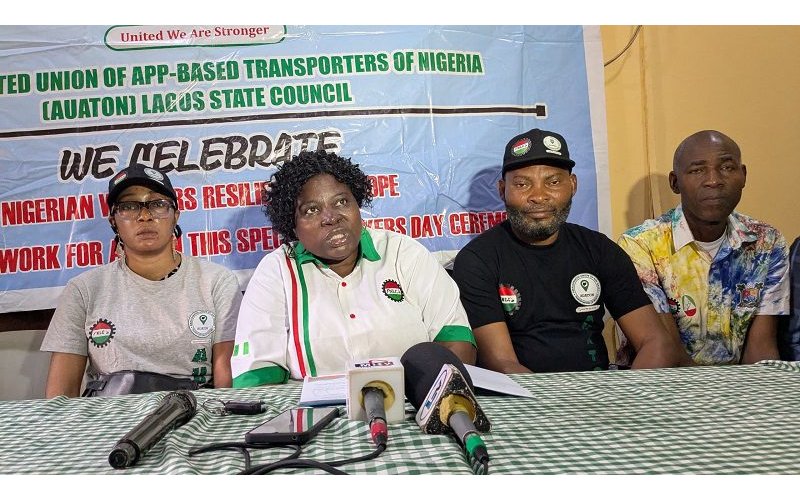
At a joint press briefing held in Lagos with the
leadership of the Amalgamated Union of App-Based Transporters of Nigeria
(AUATON) Lagos Council, Chairperson of the Lagos NLC chapter, Comrade Agnes
Sessi, decried the existing commission structure — which ranges from 20% to 30%
per trip — as exploitative and unsustainable.
Drivers Bearing the Burden
According to Comrade Sessi, the current model unfairly
shifts all operational costs to drivers while giving app companies a large
share of the income with minimal involvement or accountability.
“The app companies don’t provide vehicles, don’t fuel
them, don’t maintain them. Drivers do all that — they even settle with law
enforcement agencies and cover documentation. Yet, these companies deduct up to
30% from every trip,” she said.
Sessi added that many drivers earn as little as ?5,000
daily after working long hours, often from dawn to dusk, with no health
coverage or safety protections in place. She noted several cases where drivers
collapsed from exhaustion or were left vulnerable to attacks without any form
of insurance compensation.
"You Are Milking Them Dry"
The NLC lambasted the ride-hailing companies for
profiting off drivers' hard labour without providing any tangible welfare
support. Sessi emphasized that despite generating billions in revenue through
Nigerian drivers, the platforms do not provide training, safety gear, or
insurance schemes.
“These drivers are being treated like modern-day
slaves in their own country. Some have slumped from stress. Some have died. But
there’s no health insurance, no security — nothing. You are milking them dry,”
she declared.
She called on Uber and Bolt to publicly account for
the value they deliver in exchange for the steep commissions they charge.
Drivers Are Workers
The press briefing also tackled the controversial
classification of drivers as “independent contractors.” Sessi strongly rejected
the narrative that ride-hailing drivers are not employees, calling it a
convenient excuse by companies to evade responsibility.
“How can someone work 12 hours daily, ferrying your
customers, and you say they’re not your worker? These people are creating
wealth for you — and you are raking in billions,” she said.
The NLC argued that drivers should be legally
recognised as workers entitled to fair treatment, safety, and basic labour
rights. This view is central to AUATON’s petition submitted to the Lagos State
House of Assembly, demanding formal recognition, protection, and regulation of
the industry.
Riders Also Need Vetting
Beyond worker welfare, the NLC criticised the lack of
rider verification and safety protocols. According to Sessi, the failure to vet
passengers puts drivers at risk of robbery, abduction, or even death.
“If you verify drivers, why not riders? Some drivers
have disappeared without a trace, yet nothing is done. When a driver is
attacked or killed, the company doesn’t even reach out to the family — let
alone offer compensation,” she said.
Sessi cited recent cases of violence against drivers
and accused ride-hailing firms of showing no empathy, let alone support, in
times of tragedy. She also challenged the companies to explain how their
much-touted insurance policies actually work, given the consistent absence of
payout or protection.
“What is the purpose of your insurance coverage if no
family ever benefits when tragedy strikes? Whether life or vehicle insurance —
where is it?” she asked.
The Road Ahead
The NLC and AUATON are demanding urgent reforms in the
ride-hailing industry to protect Nigerian drivers from exploitation and
insecurity. Their demands include:
With thousands of Nigerians depending on app-based
driving for their livelihood, the NLC warned that continued inaction could
trigger protests or even strike actions.
“Enough is enough,” Sessi concluded. “These companies
must prioritise the safety, dignity, and rights of the very people keeping
their businesses alive.”
Comments:
Leave a Reply