

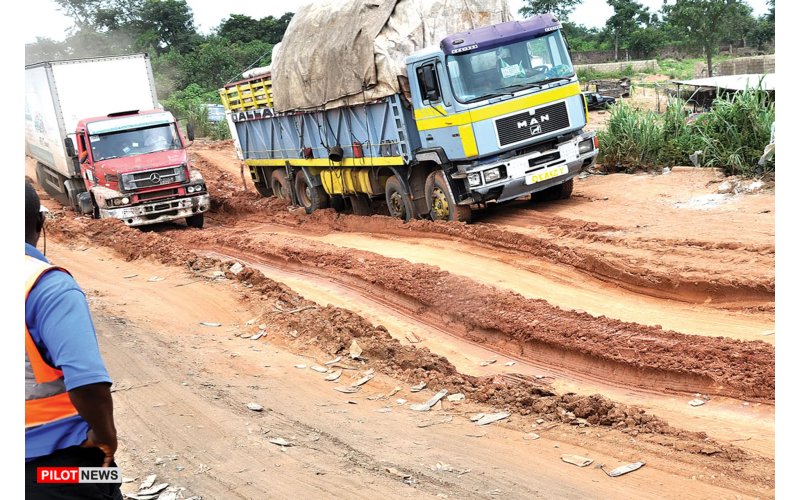
Road transportation remains the most commonly used
means of travel in Nigeria. From moving agricultural produce to connecting
cities, the road network plays a vital role in the nation’s economy.
However, the over-reliance on roads—coupled with poor
infrastructure, reckless driving, and a lack of effective safety measures—has
made accidents a recurring tragedy on our highways.
As a student of Ibrahim Badamasi Babangida University
in Lapai, Niger State, I frequently travel through the state’s road network.
Each journey comes with fear and uncertainty, knowing
that the roads—especially those along the Lapai axis—are becoming increasingly
notorious for fatal accidents, many involving heavy-duty vehicles like trailers
and tankers.
My observations reveal a troubling reality: in rural
communities around Lapai, people engage in intense manual labor, such as
cassava and yam processing. Due to a lack of modern machinery and designated
spaces, many of these activities spill onto roadside areas, placing residents
in direct danger.
The growing number of tanker and trailer movements on
these roads—fueled by increased goods importation and interstate commerce—has
only worsened the risk.
It is heartbreaking to recount the numerous accidents
I have either witnessed or heard about—incidents that have left victims
unrecognizable and forced communities to organize mass burials.
According to a recent Daily Trust report, nearly 20
people were killed in tanker-related accidents in Niger within a year, and
dozens of vehicles were destroyed by fire or collision. Reckless driving by
truck drivers has become a common menace, with tragic consequences.
More recently, the state has recorded at least three
deadly crashes that have plunged communities into mourning and fear. In Minna,
the state capital, congestion, road violations, and poor traffic management
continue to endanger lives.
These persistent problems highlight a dire need for
better road safety protocols. While road maintenance is essential, it is not
enough. Authorities must do more than patch potholes and repaint faded lines.
There should be a holistic approach that includes
strict enforcement of traffic regulations, routine safety checks for heavy-duty
vehicles, public awareness campaigns on road safety, designated routes and rest
stops for tankers and trailers, and collaboration with local communities to
reduce roadside activity hazards.
We urge both federal and state governments, along with
agencies like the Federal Road Safety Corps (FRSC), to take concrete steps
toward protecting Nigerians from preventable road disasters—especially those
involving tankers. Lives must be prioritized over logistics.
*Hassana Suleiman Kandi is a student of Ibrahim
Badamasi Babangida University, Lapai, Niger State. She can be reached
at: kandihassana@gmail.com
Comments:
Leave a Reply