

Vice Chancellor Professor Kabir Bala Ahmed
says the university is pursuing renewable energy, research innovation, and
alumni partnerships to sustain growth.
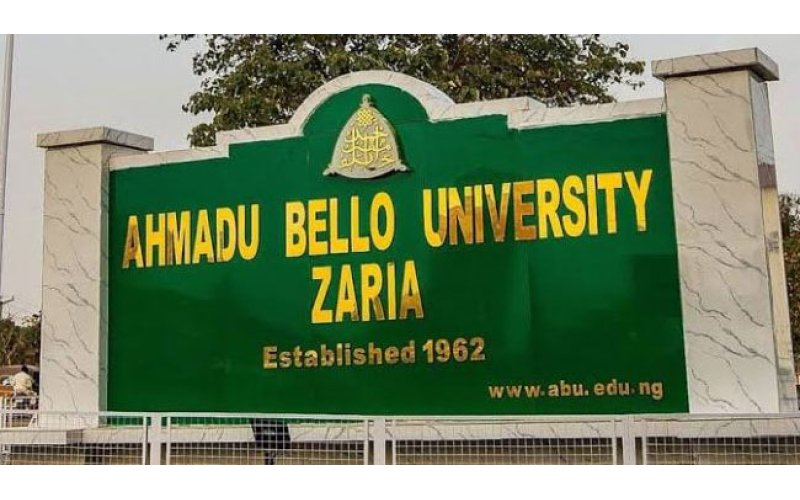
The Vice Chancellor of Ahmadu Bello University
(ABU), Zaria, Professor Kabir Bala Ahmed, has raised alarm over the
institution’s rising energy bills, describing them as a major obstacle to
teaching, research, and innovation.
Addressing journalists in his office as part of
activities marking ABU’s 63rd anniversary, Professor Ahmed said the
university’s electricity cost had reached an unsustainable level, prompting
urgent steps toward energy independence.
“The high energy bill is hampering academic activities
and research,” he said. “We’ve taken bold steps towards self-reliance by
challenging our staff and students to innovate while seeking partnerships for
sustainable energy solutions.”
?1bn TETFund Support and Renewable Energy
Project
According to the VC, the Federal Government has
acknowledged the severity of the problem and last year provided an initial
?1 billion intervention through TETFund, alongside approval for a 10-megawatt
renewable energy project for the university.
“We’ve also reached out to our alumni, particularly
the SBS class of 1975, who are implementing a solar-powered project for one of
our CBT centres,” Ahmed revealed. “We’re taking our destiny into our own hands
while expecting continued support from outside.”
Reaffirming the Founding Vision
Professor Ahmed said the anniversary presented a
moment to reflect on the vision of Sir Ahmadu Bello, the late Premier of
Northern Nigeria and founder of ABU.
“He envisioned the university as a bridge of unity and
progress for Nigeria — an institution to educate both the North and South
without ethnic or religious barriers,” he said.
The VC lamented that insecurity and poverty had slowed
the North’s development and disrupted education, stressing that ABU would now
focus on addressing these issues through research, agriculture, and policy
advocacy.
Agricultural and Research Capacity
Highlighting ABU’s unmatched agricultural potential
through the Institute for Agricultural Research (IAR), NAPRI, and
the Faculty of Veterinary Medicine, Ahmed said no other West African
university possessed such a combination of resources to drive agricultural and
economic recovery.
He emphasized that insecurity could not be resolved
through military force alone, advocating instead for non-kinetic solutions
that promote dialogue, understanding, and community-based peacebuilding.
“We have the capacity, the research, and the
networks,” he declared. “And we are ready to lead the charge in finding lasting
solutions.”
ABU’s Growth and Global Recognition
From its humble beginnings in 1962 with just
four faculties, 15 departments, and 426 students, ABU has expanded into 18
faculties, 110 departments, seven institutes, four colleges, and 17 research
centres, making it the largest university system in sub-Saharan Africa.
Ahmed said ABU’s global reputation had also grown
remarkably. The university was ranked Nigeria’s best public university
by Times Higher Education 2025, won JAMB’s award for
internationalization and diversity, and featured among the QS 2025 World
University Rankings’ top three Nigerian universities.
The VC further revealed that ABU had secured three
World Bank Centres of Excellence grants worth over $15 million, and
a €5 million Horizon grant for an AI-driven microscope project
aimed at improving the diagnosis of neglected parasitic diseases.
“Our staff and students have registered over 30
patents locally and internationally, spanning renewable energy,
pharmaceuticals, and crude oil refining technologies,” he said, underscoring
ABU’s global research relevance.
Call for Alumni Support
Despite the university’s strides, Ahmed expressed
concern over challenges such as funding shortfalls, brain drain, and
infrastructure decay, warning that sustainability was at risk.
He pledged that the institution would invest more in digital
learning, research commercialization, and startup incubation
to drive financial self-reliance.
“I call on our alumni to step up,” Ahmed appealed.
“The Sardauna gave you opportunity; now it is time to give back. You have the
resources, the talent, and the strategic positions to secure the future of this
great university for generations to come.”
Comments:
Leave a Reply